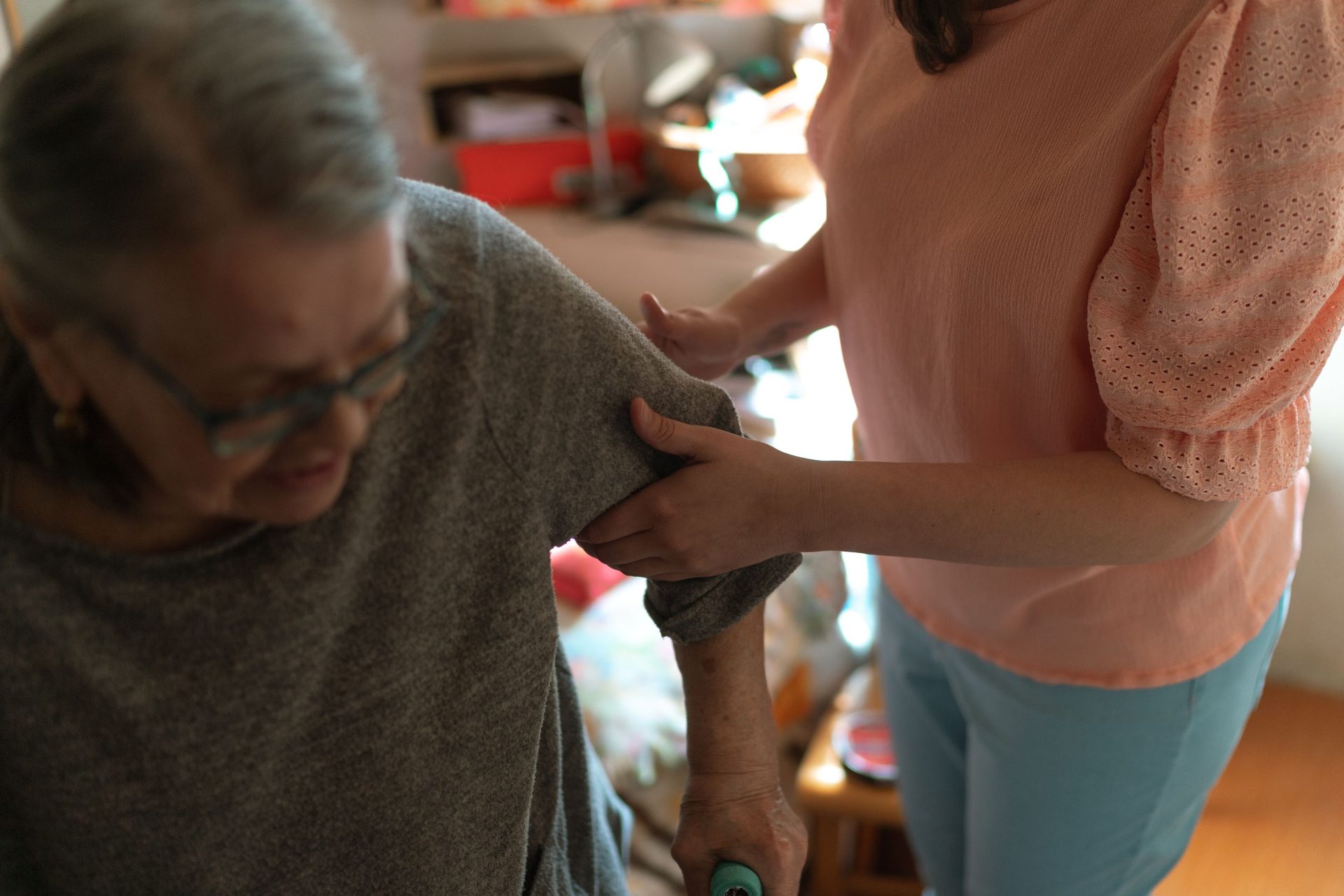
Hospital Discharge Checklist for Families
What to ask the ward, which medicines and equipment to check, what to collect on the day, and how to have care ready for your parent's first night home.
A safe hospital discharge comes down to four things being settled before your parent leaves the ward: who is in charge of the discharge, what has changed with their medicines, what equipment and care will be at home, and who you call if something goes wrong. Planning should start on the day they are admitted, so start asking questions then. This checklist sets out what to ask, what to collect on the day, and what needs to be in place for the first night back.
Key points
- Ask on day one for the name and number of the person coordinating the discharge. Under NICE guidance, one practitioner should be responsible for coordinating it.
- Get a copy of the discharge summary and a complete list of medicines before your parent leaves. The summary should be handed to your parent on the day they are discharged.
- You do not have to agree to provide care. Staff should ask whether you are willing and able, and should not assume it.
- Council-arranged reablement and intermediate care are free for the first 6 weeks, and so is community equipment. Ongoing care afterwards is means-tested unless your parent qualifies for NHS continuing healthcare.
- Report the hospital stay if your parent gets a disability benefit. Payment is suspended after 28 days in hospital, and for Attendance Allowance, stays 28 days or less apart are added together, so a quick readmission counts towards the same 28 days.
- Call 999 if your parent suddenly becomes confused after coming home, or shows signs of sepsis such as blue, pale or blotchy skin or very fast breathing. The NHS treats both as emergencies.
What happens when someone is discharged from hospital?
Doctors review every patient on a general ward against a set of criteria, and once your parent no longer needs care in an acute hospital, the aim is to discharge them that day. National guidance from the Department of Health and Social Care says planning "should begin on admission" and that people should not spend longer than necessary in hospital. It also says no one should be discharged until it is safe to do so.
Most people go home. The guidance sorts discharges into four pathways:
- Pathway 0: home with no new care needs, organised by the ward.
- Pathway 1: home with new or extra health or care support, such as reablement visits.
- Pathway 2: a short stay in a community bed with recovery support, such as a community hospital or care home.
- Pathway 3: a move to a care home for people likely to need long-term care, which the guidance says should be used "only in exceptional circumstances".
This is called discharge to assess, or "home first". Long-term needs are normally assessed after a period of recovery and not while your parent is still on the ward. Our guide to discharge to assess and the four pathways goes into each one in detail.
In London, your parent may be in a hospital in a different borough from the one they live in. DHSC guidance asks each council to give hospitals a single point of contact for planning the discharge of people living in its area, so ask early which council is arranging your parent's care and who the contact there is. See the boroughs we cover.
Hospitals are under real pressure to free beds. Age UK's analysis of NHS England data found more than 13,000 people a day in 2025/26 who were well enough to leave hospital but were still there. This pressure means discharges can move quickly once a doctor signs your parent off. The questions below are easier to settle early in the stay than on the morning of discharge.
| Stage | Check | Who to ask |
|---|---|---|
| During the stay | Name and number of the person coordinating the discharge | Ward nurse in charge |
| During the stay | How your parent managed before admission: stairs, falls, who lives with them, help they already had | Tell the ward team |
| During the stay | What care you can and cannot give | Discharge coordinator |
| Before discharge | Which pathway, when care starts, and whether it is free | Discharge coordinator or social worker |
| Before discharge | Equipment ordered and delivered before your parent gets home | Occupational therapist |
| Before discharge | How your parent is getting home | Ward staff |
| Before discharge | Hospital stay reported if they get Attendance Allowance, DLA or PIP | Disability Service Centre (AA, DLA) or PIP enquiry line |
| On the day | Copy of the discharge summary and the full medicines list | Ward nurse |
| On the day | New medicines, plus their own medicines the ward was keeping | Ward nurse or pharmacy |
| On the day | Referral to the Discharge Medicines Service | Ward pharmacist |
| First week | Old tablets at home match the new list; anything unclear checked | Community pharmacist or GP |
| First week | Follow-up appointments kept; warning signs watched | GP, NHS 111, or 999 in an emergency |
Questions to ask the ward during the stay
Ask these as early as you can, and write down the answers with the name of the person who gave them. Your parent has to agree to you being involved. If there is doubt about whether they can consent, for example because of confusion or dementia, staff must follow the principles of the Mental Capacity Act (NICE NG27). If your parent lacks capacity, staff should fully involve an attorney appointed under a registered health and welfare lasting power of attorney (or a welfare deputy appointed by the Court of Protection). If no one has been appointed, staff make a "best interests" decision and should consult the family first (Age UK).
Who is in charge
- Who is coordinating the discharge, and how do I reach them? NICE recommends that one practitioner is responsible, acting as the central contact for the family.
- Do you know how my parent managed before admission: stairs, falls, who lives with them, and what help they already had? NICE guidance asks ward teams to treat families as an important source of this knowledge, so offer the detail even if nobody asks.
- What criteria will the doctors use to decide my parent is ready, and when do you expect that to be?
- Which discharge pathway are you planning for, and where to?
- Can I have a copy of the hospital's discharge policy? Carers UK suggests asking the ward manager or PALS (the Patient Advice and Liaison Service).
Care at home
- Will my parent need help at home, and has a referral been made? Who to (the council, a reablement team or a community health team)?
- When does that help start? Will someone visit on the day of discharge? For people going home with new care (pathway 1), Age UK's factsheet says there should be a safety and welfare check on the day.
- Is it free, and for how long? What happens when the free period ends?
- Has an occupational therapist assessed whether my parent can manage stairs, the bathroom and getting in and out of bed?
What you can take on
Tell the ward exactly what you can do. Be clear about what you cannot do, such as staying overnight, lifting, or visiting before work. DHSC guidance says families should be involved in discharge decisions. Age UK's factsheet says staff should ask a partner or relative whether they are able and willing to provide care, and that this "should not be assumed". Carers UK puts it plainly: caring is a choice. If you will be giving care, you can have a carer's assessment from the council in your own right.
Medicines after hospital discharge: what to ask
Medicines often change in hospital. Some are stopped, doses change and new ones are added. One risk after discharge is mixing up the new list with old tablets still at home.
- Ask for a complete list of medicines. People should be given one when they move between hospital and home, and their family too where appropriate (NICE NG27, 1.5.2).
- Ask what has changed and why. Ask which tablets at home should now be stopped, and whether any new ones need blood tests or monitoring.
- Ask how much will be supplied. This varies by hospital. Guy's and St Thomas', for example, supplies new medicines for 14 days and returns any medicines the patient brought in. Find out when the GP needs to issue a repeat prescription.
- Ask for a referral to the Discharge Medicines Service. With your parent's agreement, the hospital sends details of the changes to their usual community pharmacy. The pharmacist then contacts them at home to go through what each medicine is for, its side effects and how to take it safely.
- Ask who to call about a medicine problem in the first 24 hours. Under NICE guidance, people at the end of life should be given a contact for medicine and equipment problems in the first 24 hours, and staff should consider doing the same for people with complex needs.
If your parent needs help taking tablets at home, our guide to medication support at home explains the difference between prompting and administering, and what a carer can do.
Equipment and the home
Any essential specialist equipment and support should be in place when your parent is discharged, and equipment needs should be discussed as soon as discharge planning starts (NICE NG27, 1.5.18). In England, community equipment (aids, and minor adaptations costing £1,000 or less) arranged by the council to help with daily living or nursing at home is free of charge.
- What equipment is being ordered: a commode, a raised toilet seat, a frame, a bed lever, a hospital bed?
- Who is delivering it, and will it arrive before your parent does? Get the supplier's phone number.
- Does the bed need to move downstairs? Is there room for a frame to get through doorways?
- Will someone show your parent (and you) how to use it?
Ask about the home itself too. Is the heating on, is there food in, and is the route from bed to toilet clear of rugs and lit at night? Is there a way for a carer to get in if your parent cannot get to the door, such as a key safe?
Is care after hospital discharge free?
Some of it is. Council intermediate care and reablement, meaning a planned programme to help your parent regain the skills to live independently, must be free for the first 6 weeks. NHS staff such as district nurses and the GP are free as normal. Our guide to how reablement works and what happens when it ends covers this in more detail.
Ongoing care after that is not automatically free. The council will assess your parent's needs and then their finances, and they may have to pay some or all of the cost. The exception is NHS continuing healthcare, which is free care arranged and funded by the NHS for some people with long-term complex health needs. If your parent has complex health needs, ask whether they should be screened for it. DHSC guidance says the full assessment should normally happen once they are back in the community.
Your parent does not have a right to stay in a hospital bed once they no longer need hospital care, even if the option they prefer is not available yet. DHSC guidance says they should be offered a suitable alternative for their short-term recovery. If you think the plan is unsafe, say so in writing to the discharge coordinator before the day.
On the day: what to collect before leaving
Getting medicines, letters and transport ready can take a few hours once your parent is fit to go. Some hospitals, including Guy's and St Thomas', have a discharge lounge where patients wait. Check you have these before you leave the building:
- The discharge summary. A copy should be given to the person on the day of discharge and sent to the GP within 24 hours, in line with NICE guidance.
- The new medicines and the medicines list, plus any of their own medicines the ward was keeping.
- Any equipment for the trip home, such as a walking frame, and a fit note if your parent is still working.
- Follow-up details: outpatient appointments, district nurse visits, blood tests.
- Numbers to call after discharge, including the ward and the coordinator.
- Clothes, shoes, keys and valuables.
- A way home. DHSC guidance says this should be family, the voluntary sector or a taxi where possible, with NHS patient transport only as a last resort. If you think your parent's condition means they need patient transport, ask the ward early, because it takes time to organise.
Care in place for the first day home
The first day and night are when gaps show. Before your parent arrives, check:
- You know the time of the first care visit, and the carer knows the medicines have changed.
- Someone can be there when your parent gets home, or the first visit is timed to meet them.
- Meals and drinks are within easy reach, and your parent can reach the phone.
- Important numbers are written down by the phone: the GP, the ward, the coordinator, the pharmacy, and you.
- Night-time is planned. If your parent needs help to get to the toilet at night, a day-time visit will not cover that, so arrange something for the night.
Benefits to sort out when a parent is in hospital
A hospital stay can affect disability benefits, so report it when your parent goes in and again when they come home. Who you tell depends on the benefit:
- Attendance Allowance: tell the Disability Service Centre (0800 731 0122).
- Disability Living Allowance: tell the Disability Service Centre. The number depends on your parent's date of birth: 0800 731 0122 if they were born on or before 8 April 1948, or 0800 121 4600 if born after.
- Personal Independence Payment: tell the PIP enquiry line straight away (0800 121 4433).
According to Age UK's hospital discharge factsheet, payment is suspended after 28 days in hospital, and free short-term care in a care home or community hospital counts towards that. It should restart when they leave. For Attendance Allowance, separate stays 28 days or less apart are linked and added together (Age UK factsheet 34), so a readmission soon after discharge counts towards the same 28 days.
If you get Carer's Allowance for looking after them, it stops when their benefit is suspended. You have to tell the Carer's Allowance Unit yourself when the person you care for goes into hospital.
Warning signs after discharge: when to call 999, 111 or the GP
Ask the ward which warning signs to watch for with your parent's condition. The general NHS advice is below.
Call 999 if your parent:
- suddenly becomes confused (the NHS says many causes need treating as soon as possible)
- has sudden pain or discomfort in the chest that does not go away (it can feel like squeezing, pressure, burning or indigestion), pain that spreads to the arms, neck, jaw, stomach or back, or chest pain with sweating, feeling sick, light-headed or short of breath (NHS: chest pain)
- has severe difficulty breathing, such as gasping or not being able to get words out
- shows signs of a stroke: the face drooping, weakness in one arm, or slurred speech
- has fallen and may have hurt their head, back, neck or hip, or cannot get up
- shows signs of sepsis, a serious reaction to an infection: breathing very fast; confused, slurred speech or not making sense; blue, pale or blotchy skin, lips or tongue (on black or brown skin this can be easier to see on the palms or soles); a very high or very low temperature, or feeling hot, cold or shivery; or a rash that does not fade when you press it (NHS: sepsis)
Sepsis is worth knowing about after a hospital stay. The NHS says people over 75, and people with a catheter, a wound or a weakened immune system, are more likely to get it. It also notes that a high temperature is less common in older adults, and that symptoms can be harder to spot in people with dementia, so trust your instincts if your parent seems seriously unwell. If your parent has had sepsis in the past 12 months and has signs of an infection, such as a very high temperature or feeling hot, cold or shivery, the NHS says to call 111.
Contact the GP, or NHS 111 if the GP is closed, for problems that are urgent but not an emergency, such as a fall where your parent can get up but may be hurt or unwell, or a problem you think a new medicine is causing. NHS 111 tells you where to go, including 999 or A&E if needed. If your parent has a care plan or complex problems from an existing condition, the NHS suggests phoning 111 instead of using 111 online. If you are not sure whether to call 999, use 111.
What if the discharge goes wrong?
Start with the staff who arranged the discharge. If that does not resolve it, the NHS advises contacting PALS at the hospital. You can get free help from an NHS complaints advocate at any stage. POhWER provides this in some areas; to find the service that covers your parent, search for "NHS complaints advocacy" with your area or ask your local Healthwatch (NHS England). If you are still unhappy after the hospital's final response, you can take the complaint to the Parliamentary and Health Service Ombudsman, which makes final decisions on unresolved NHS complaints in England. If the problem is with council-arranged care, ask the council to review it. One complaint to either the hospital or the council can cover both (Age UK). If you arranged care yourselves and the agency does not resolve your complaint, you can go to the Local Government and Social Care Ombudsman. If your parent is already home and unsafe, ring the GP or 111 the same day, and do not wait for a complaint to be resolved.
Questions families ask
Can my parent be discharged at night?
Discharge services are expected to run 7 days a week, and DHSC guidance says no one should be discharged until it is safe to do so. Ask whether the hospital's discharge policy covers late-evening discharges (the ward manager or PALS can give you a copy). If a late discharge is proposed and there is nobody at home and no care booked for that night, tell the ward and ask for it to be rearranged.
We pay for care ourselves. Do we still need the council?
Yes, it is still worth it. Your parent is entitled to a needs assessment whatever their savings, and any reablement the council provides is free for up to 6 weeks regardless of their money. If they will be paying for ongoing care, you can arrange it yourselves with a CQC-registered agency, or ask the council to arrange home care for you, though it may charge an arrangement fee.
What if my parent refuses the care being offered?
An adult with capacity can refuse care. Age UK notes they cannot stay in hospital simply because they refuse what is offered. If refusal leaves them at risk, tell the coordinator and the GP, and ask for the risks to be talked through with your parent before discharge.
How we can help
JNP Sidona is a CQC-registered homecare agency based on Lewisham High Street. We provide care at home after a hospital stay: personal care, medication support that follows the discharge medicines list (we raise any mismatch with the GP or pharmacist), meals, and moving safely with new equipment. We also provide live-in care, where a carer lives in the home with your parent. We are a small, owner-managed team, so call while the discharge is still being planned and we will tell you honestly whether we can staff it, and from when. Jackie, our registered manager, does a free home assessment and writes the care plan, and we give a quote after that. Visiting care is in Lewisham, nearby south-east London and parts of central and east London; live-in care is available across London. We are not part of the NHS or council discharge team, and we don't give benefits or funding advice, so check reablement and continuing healthcare with the ward first. See the areas we serve, or read about paying for care in London.
Sources
- GOV.UK (DHSC): Hospital discharge and community support guidance (updated 26 January 2024), checked 4 November 2026
- NHS: Planning to leave hospital, checked 9 October 2026
- NICE: Transition between inpatient hospital settings and community or care home settings for adults with social care needs (NG27), recommendations, checked 9 October 2026
- Age UK: Factsheet 37, Hospital discharge and recovery (November 2025), checked 9 October 2026
- Age UK: Delayed discharges up nearly 70% in five years (22 July 2026), checked 9 October 2026
- legislation.gov.uk: Care and Support (Charging and Assessment of Resources) Regulations 2014, regulation 3, checked 9 October 2026
- Carers UK: Coming out of hospital, checked 9 October 2026
- Carers UK: Coming out of hospital checklist, checked 9 October 2026
- Guy's and St Thomas' NHS Foundation Trust: Leaving hospital, checked 9 October 2026
- Guy's and St Thomas' NHS Foundation Trust: Discharge medicines service, checked 9 October 2026
- Age UK: Factsheet 34, Attendance Allowance (May 2026), checked 9 October 2026
- GOV.UK: Disability Service Centre, checked 9 October 2026
- GOV.UK: Personal Independence Payment, report a change of circumstances, checked 9 October 2026
- GOV.UK: Carer's Allowance, report a change in circumstances, checked 9 October 2026
- NHS: When to call 999, checked 9 October 2026
- NHS: When to use NHS 111 online or call 111, checked 9 October 2026
- NHS: Confusion, checked 9 October 2026
- NHS: Chest pain, checked 9 October 2026
- NHS: Shortness of breath, checked 9 October 2026
- NHS: Stroke symptoms, checked 9 October 2026
- NHS: Falls, checked 9 October 2026
- Local Government and Social Care Ombudsman, checked 9 October 2026
- NHS: Sepsis, checked 9 October 2026
- NHS: NHS continuing healthcare, checked 9 October 2026
- NHS England: Feedback and complaints about NHS services, checked 9 October 2026
- Parliamentary and Health Service Ombudsman, checked 9 October 2026
Keep reading
Related guides



Talk it through with Jackie
No call centre and no obligation. Tell us what you are dealing with and we will tell you honestly whether we can help. We arrange and provide care; we cannot advise on benefit claims.
Looking for work rather than care? Apply online or read about carer jobs in London. Referring as a professional? Use our referral route.
Ask us to call you back
Thank you. Your request has been sent and we will call you back as soon as we can.