The riskiest week is the first one home
Hospital discharges in London move fast. A ward needs the bed, a date is set, and a family who were told "sometime next week" get a call saying it is tomorrow. The person coming home is usually weaker than they were before they went in, often on new medication, and sometimes unable to manage the stairs or the bathroom they managed perfectly well a fortnight ago.
That first week is when readmissions happen: a fall on the way to the toilet at night, tablets taken wrongly because the discharge list and the old prescription disagree, or simply not eating because nobody is there to cook. Getting care in place before the discharge, rather than scrambling after it, is the single most useful thing a family can do.
Call us while the discharge is still being planned
The earlier we hear, the better the package. Ideally, call as soon as a discharge is being discussed, even if nothing is confirmed. We will check whether we can staff it and from when. If we cannot, we say so promptly, so you can approach someone else without losing days.
We work with the people already involved: the ward and discharge coordinators, hospital social workers, occupational therapists, district nurses and the GP. Hospitals serving the areas we cover include University Hospital Lewisham, King's College Hospital, Guy's and St Thomas', the Royal London and the Princess Royal in Farnborough.
Ask the ward for the paperwork. Before discharge, ask for the discharge summary and the list of medication to take home. It is what the GP, the district nurse and our carers all work from, and it is much easier to get before someone leaves than after.
What discharge support includes
- A home assessment, arranged around the discharge date wherever possible
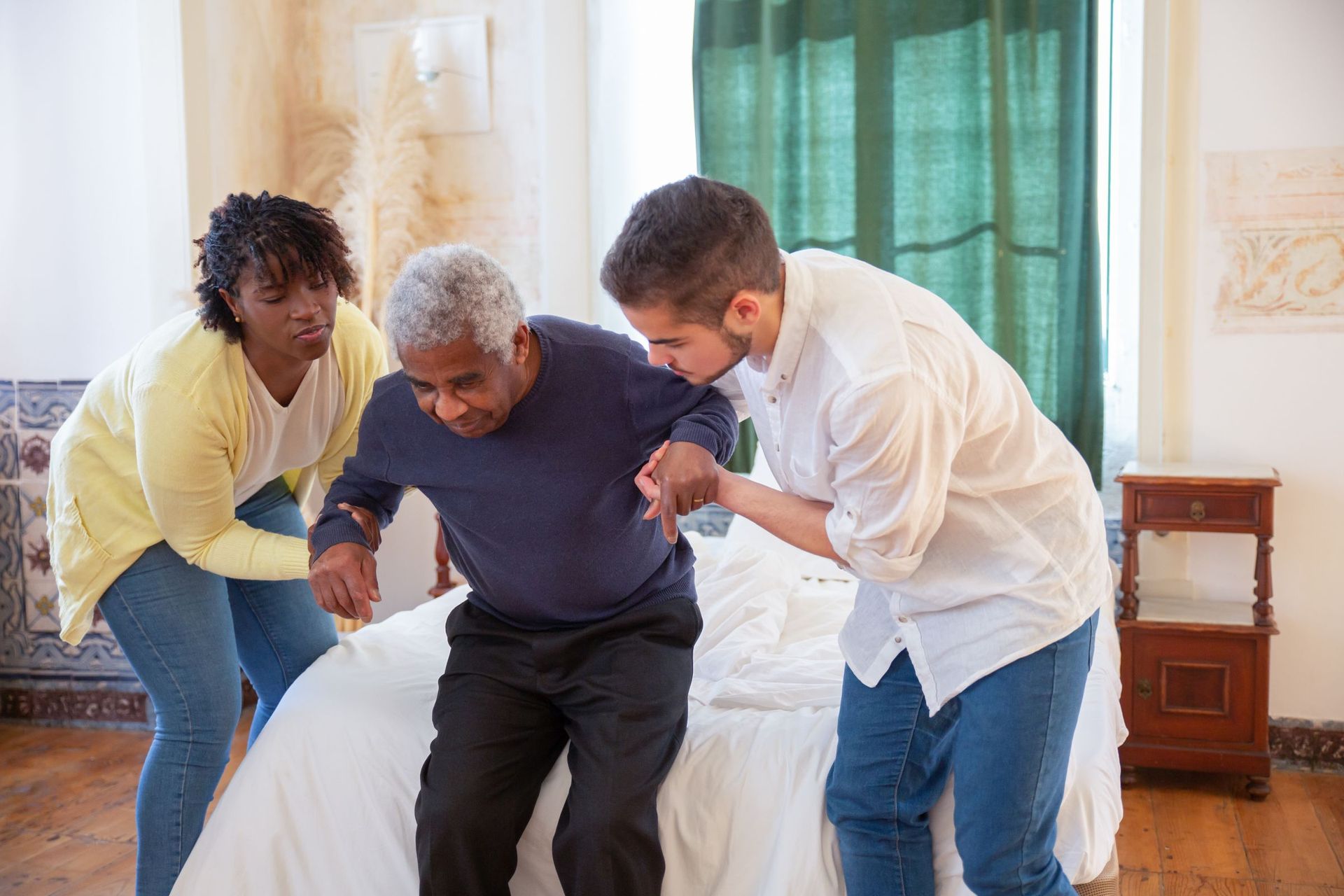
- Personal care: washing, dressing, continence care and help getting in and out of bed
- Medication support, including checking the discharge list against what is actually in the house
- Meals, drinks and keeping the fridge stocked in the first days back
- Moving safely around the home, using any equipment the occupational therapist has arranged
- Watching for the early signs that something is not right, and escalating to the GP, district nurse or 111
- Clear written notes, so family and professionals can see exactly how each visit went
Visits can run several times a day, with the length of each agreed at the assessment. Where someone needs a presence in the house around the clock, live-in care is usually the better answer, and where the condition is more involved, such as after a stroke, our complex care service applies.
Short-term now, longer-term if it is needed
Many people need a lot of help for the first few weeks and much less once they are stronger. The care plan is reviewed as that happens, and visits are reduced as confidence returns. For others, the hospital stay is the point at which it becomes clear that ongoing care is needed, and the same small team simply carries on.
Who pays for care after a hospital stay
Some people leaving hospital are offered a period of short-term support arranged by the council or the NHS, often called reablement or intermediate care, which is usually free for a limited time. Where someone has significant health needs, an NHS Continuing Healthcare assessment may be appropriate. Others pay privately so care can start on the day. Our guide to paying for care explains the routes, and the hospital discharge team can tell you what has been arranged.
Questions families ask
How quickly can care start after a hospital discharge?
It depends on the hours needed and where the person lives, which is why it helps to call while the discharge is still being planned, not on the day.
Can you work alongside NHS or council reablement?
Yes. We can provide care alongside what has been arranged, or take over when a short-term package ends so there is no gap between the two.
What if my relative needs more help than we expected once home?
Tell us. The plan is reviewed as needs change in either direction, and in the first weeks after a discharge they often change quickly.
Do we need to be there on the day they come home?
It helps if someone can be, but it is not essential. We agree access arrangements, such as a key safe, before the first visit so carers can let themselves in.
Talk it through with Jackie
No call centre and no obligation. Tell us what you are dealing with and we will tell you honestly whether we can help.