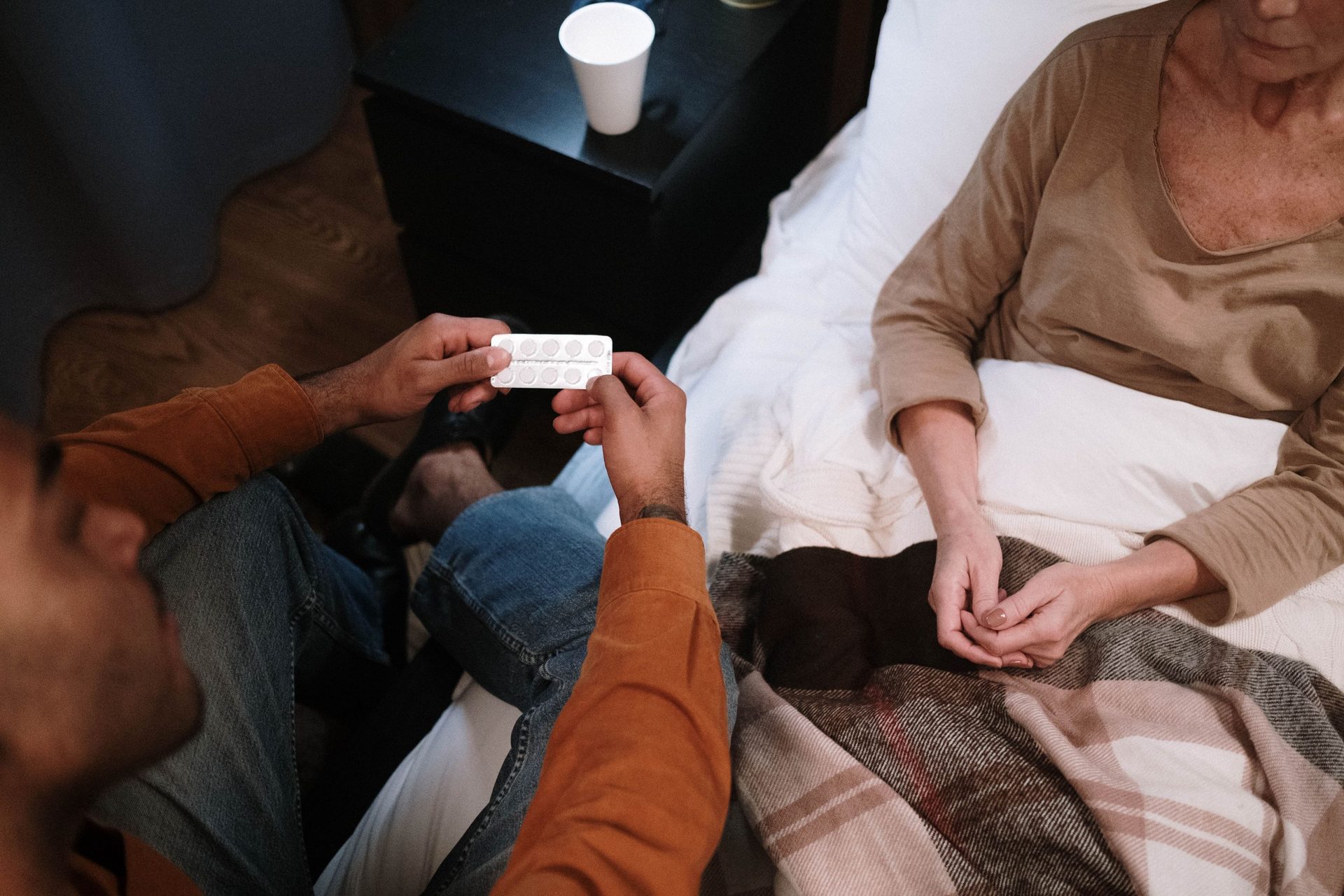
Medication Support at Home in London
Medication support at home means trained carers prompting, assisting with or giving medicines as the prescriber intended, and recording every dose on a medication record. It is usually part of a wider visit. Carers do not prescribe or change doses, and nursing tasks such as injections stay with the district nurse.
The quiet reason people end up in hospital
Medication is one of the commonest things to go wrong at home, and it rarely goes wrong dramatically. Someone takes the blood pressure tablet twice because they cannot remember the morning. A blister pack runs out on a Friday. A new prescription from the hospital is added without the old one being stopped. Weeks later there is a fall, or a confusion, or an admission, and nobody connects it back.
Getting medication right is unglamorous and it prevents more crises than almost anything else we do. It is also linked to falls: government guidance on falls lists taking several medicines, and some medicines in particular, among the risk factors (Office for Health Improvement and Disparities). A carer who sees the tablets every day is often the first to notice dizziness after a change.
Three levels of support
Prompting
The person manages their own medication and a carer reminds them, checks it has been taken, and records it. Appropriate where someone is capable but forgetful.
Assisting
The person directs what happens but needs physical help: getting a bottle open, popping a blister pack, applying a cream to a place they cannot reach, or steadying a hand for eye drops.
Administering
The carer takes responsibility for giving the medication as prescribed. It should only be done by carers trained for it, and each dose is recorded on a medication administration record (MAR chart), in line with NICE guideline NG67, managing medicines for adults receiving social care in the community.
Which level applies is decided for each medicine, not for the person as a whole. Someone might manage their own inhaler, need a prompt for their evening tablets and need a carer to put in their eye drops. The care plan records who is responsible for each medicine and how the support is given, as NG67 asks.
Recorded, not remembered. Every dose is signed for on a medication administration record. That chart is what lets a GP, district nurse or family member see exactly what has been taken and when, and it is what turns a vague worry into a specific question at the next review.
What we cover
- Oral medication, including blister packs and dosette boxes
- Creams, ointments and patches, with the site rotated and recorded
- Eye and ear drops
- Inhalers
- Ordering repeat prescriptions and collecting from the pharmacy
- Watching for side effects and flagging them early
- Keeping the record straight when the hospital changes something
Medication given through a feeding tube sits within our complex care service, and carers do it only where the nursing team has delegated the task and signed them off for that person.
Is medication support the right service?
A good fit if
- doses are being missed, doubled up or muddled, especially after a hospital stay changed the list
- the person needs a hand opening packs, applying creams or using eye drops
- the family wants a clear record of what has been taken and when
Not the right service if
- the medicine needs a nurse, such as most injections, syringe drivers or catheter care. Those stay with the district nurse
- you want someone to review or change the prescription. That is the GP or pharmacist
- the only need is a reminder. A pharmacy can often help with reminder charts or packaging, and we can talk that through
What the NICE guideline asks of a home care provider
NG67 is the national guidance for medicines support in people's own homes. A few of its recommendations are worth knowing as a family, because they tell you what good practice looks like from any provider:
- The support is assessed first. Medicines support is part of the overall assessment, and the provider should not take on managing someone's medicines unless the assessment shows it is needed (recommendations 1.2.1 and 1.2.2).
- The GP and pharmacy are told. When a care provider starts medicines support, it should let the person's GP practice and pharmacy know, with a named contact for questions (1.3.1).
- Every occasion is recorded, including a reminder given and a dose declined, not only the doses taken (1.5.2).
- Doses are not left out for later unless that has been agreed after a risk assessment and written into the care plan (1.7.8).
- Specialist tasks need a nurse to delegate them. Giving a medicine that needs particular skills, such as through a PEG tube, is only handed to a care worker when it has been agreed locally, the person consents, responsibilities are recorded and the care worker has been trained and assessed as competent (1.3.5).
Working with the GP and pharmacy
We are not prescribers and we do not change doses. What we do is keep an accurate record and escalate: to you, to the GP, to the district nurse or to the pharmacist. A great deal of medication trouble comes from nobody having the full picture, particularly after a hospital stay when the discharge letter and the repeat list disagree. A carer who sees the medication every day is well placed to notice that.
Questions families ask
Can carers give injections?
Usually not. Injections, including most insulin, stay with the district nurse. A carer can only take on a specific task where a nurse has delegated it, trained them and signed them off for that person, and we will tell you at the assessment whether that applies.
Can you order and collect prescriptions?
Yes. Managing repeats and collecting from the pharmacy is a normal part of the service, and it removes one of the commonest points of failure.
What happens if a dose is missed?
It is recorded as missed with the reason, and we escalate according to the medication and the plan, which may mean contacting the GP or 111. It is never quietly left.
Can a carer leave tablets out for later?
Not as a matter of routine. NICE guideline NG67 says care workers should give medicines from the container they come in, and should only leave a dose out for later where that has been agreed after a risk assessment and written into the care plan. If it would help, raise it at the assessment.
Can we see the medication records?
Yes. The MAR chart is in the home and family are welcome to look at it at any time.
Where we visit
Medication support is given on visiting rounds from our Lewisham office, so it depends on where the person lives:
- Regular visits: Bexley, the City of London, Greenwich, Lewisham, Southwark, Tower Hamlets and Westminster
- Visits when carers are free: Barking and Dagenham, Bromley, Camden, Croydon, Dartford, Hackney, Hammersmith and Fulham, Haringey, Islington, Kensington and Chelsea, Lambeth, Merton, Newham, Redbridge, Waltham Forest and Wandsworth
- Further out: a live-in carer can give medication support anywhere in London
A few neighbourhoods at the edges of these boroughs depend on which carers are free. Send us the postcode and we will tell you honestly.
From our blog
Guides that may help


Talk it through with Jackie
No call centre and no obligation. Tell us what you are dealing with and we will tell you honestly whether we can help. We arrange and provide care; we cannot advise on benefit claims.
Looking for work rather than care? Apply online or read about carer jobs in London. Referring as a professional? Use our referral route.
Ask us to call you back
Thank you. Your request has been sent and we will call you back as soon as we can.