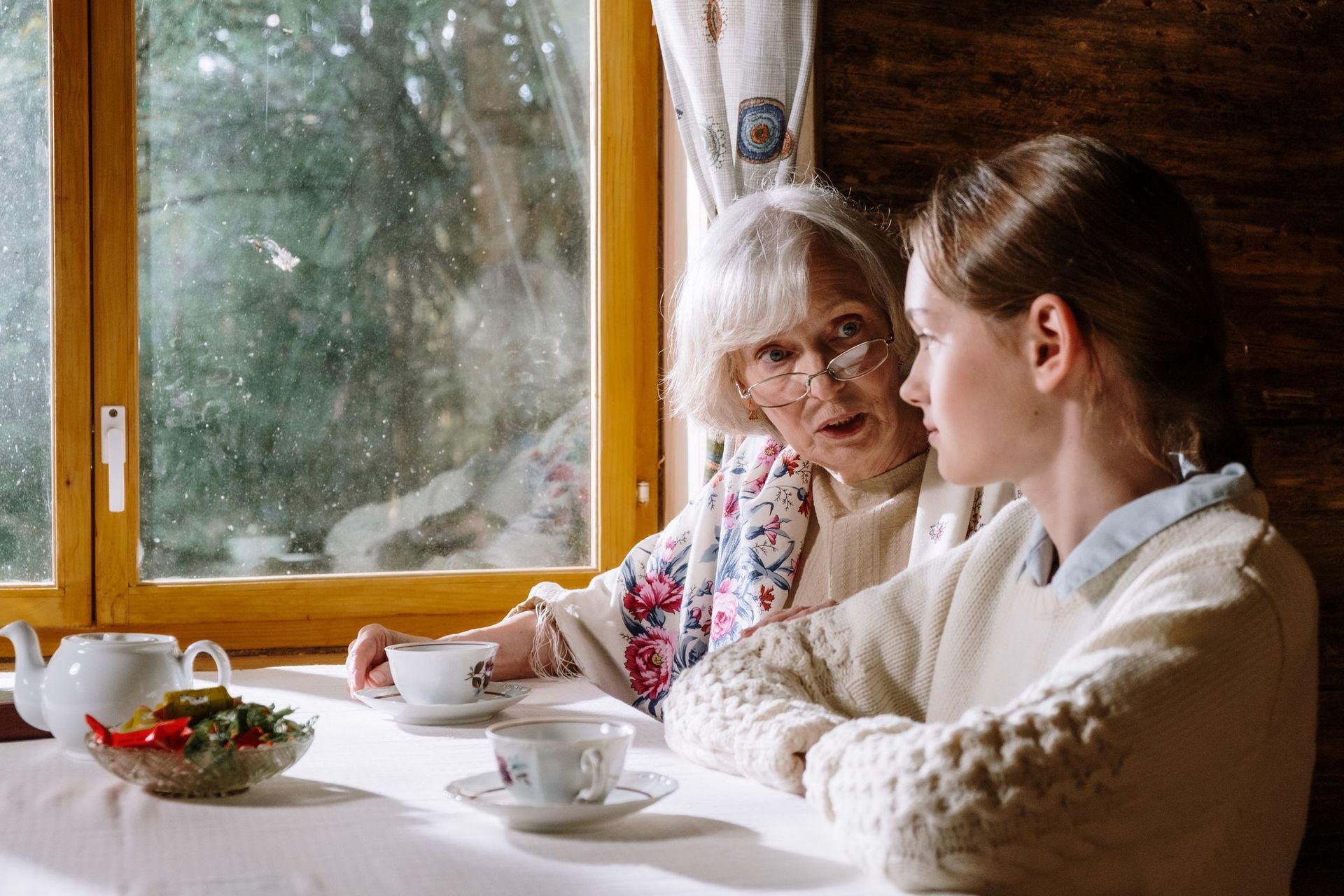
Companionship Care for Elderly People in London
Companionship care is paid, regular visits from the same carer for company, conversation and getting out of the house, for an older person who is managing at home but lonely or losing confidence. Visits are usually an hour or two, and they can be combined with practical help. It starts with a free home assessment.
Loneliness is a health problem
It is easy to treat company as the soft end of care, the nice extra once the washing and the medication are sorted. It is not. The Campaign to End Loneliness describes loneliness in older age as a health threat, and in practical terms an older person who sees nobody is noticed later when something goes wrong.
In London it is easy to miss. Someone can live on a busy street and go days without a proper conversation, and family who live further away often only hear how things are over the phone, where everyone says they are fine.
Is companionship care the right service?
A good fit if
- the person is managing day to day but sees few people, and would welcome a regular visitor
- they have stopped going out, or lost confidence after a fall or an illness
- they have refused other help, and company is an easier place to start
- family live too far away to visit often and want someone to notice how things are going
Not the right service if
- you are looking for a free befriending scheme. Companionship care is a paid service; see the free schemes listed below
- the main worry is that the person cannot be left alone. That is our sit-in service or live-in care
- visits are needed somewhere we cannot reach. See where we visit, below
What companionship visits look like
Whatever the person wants them to look like. For example:
- Sitting and talking, over a cup of tea, without watching the clock
- Getting out of the house: the shops, the park, a café, the garden centre
- Going to appointments and remembering what the consultant actually said
- Hobbies that have lapsed because doing them alone stopped being enjoyable
- Cards, crosswords, photographs, music, reading the paper together
- Help with letters, forms and the phone calls that have piled up
- Keeping in touch with family, including the video calls that never quite work
- A meal cooked and eaten together, not left in the fridge
The visit that notices things. A companion who comes weekly is often the first to spot that someone is unsteadier than last month, eating less, or getting confused about the day. That early warning is worth a great deal, and it only happens if it is the same person coming.
A way in for people who refuse care
Companionship is frequently how care starts in families where the idea of a carer has been flatly rejected. Someone will accept a person who comes for company and gives them a lift to the shops long before they will accept help with a bath. Once the relationship exists, personal care becomes a conversation rather than a confrontation.
Where the concern is safety more than sociability, our sit-in service covers someone being present so a person is not left alone.
Paid companionship or free befriending?
They are different things, and many people use both. A befriender is a volunteer, usually visiting or phoning once a week, and they do not help with personal care. A companionship carer is a trained care worker on a care plan, who can also help with a meal, the toilet or getting ready to go out, and who reports changes to the family. If company is all that is needed, start with a free scheme. In the areas we visit these include:
- Age UK Lewisham and Southwark, which runs befriending and outreach
- Link Age Southwark, a befriending charity with a service for people with mild to moderate dementia
- Age UK Bromley & Greenwich befriending for isolated older Greenwich residents
- Age UK East London, which offers befriending in Tower Hamlets
- Open Age, which holds the befriending contract for people aged 50 and over in Westminster
How companionship visits are paid for
Most families pay privately for companionship. The council can help too. The national eligibility rules under the Care Act include being able to keep up family and other relationships, and to use local facilities such as shops, transport and community groups (Care and Support (Eligibility Criteria) Regulations 2015). So where someone cannot manage those without help, and it is having a significant effect on their wellbeing, a council needs assessment can lead to support with them, and a direct payment can then be used with a provider you choose. Attendance Allowance, which is not means-tested, can also be put towards care. We give you a written figure after the free assessment. See our guide to paying for care.
Questions families ask
How long is a companionship visit?
Usually an hour or two, because much less than that is not really company. Some clients have a weekly half-day and an outing.
Can the carer take my mother out in a car?
Possibly, but we do not promise it in advance. It depends on whether the carer matched with her drives and is insured to carry clients, and we confirm that before any car trip is booked. Outings on foot, by bus or by taxi with the carer alongside are always possible.
Will it be someone she has something in common with?
We try hard on this, because it is the whole service. Interests, temperament and language all matter. If the match is not working, tell us and we will change it. Nobody should have to make polite conversation with someone they do not click with.
Can we combine companionship with practical help?
Yes. A visit can combine a bit of housework, a cooked meal and an hour of conversation.
Where we visit
Companionship works best when the same carer comes every time, so we only offer it where our visiting rounds run:
- Regular visits: Bexley, the City of London, Greenwich, Lewisham, Southwark, Tower Hamlets and Westminster
- Visits when carers are free: Barking and Dagenham, Bromley, Camden, Croydon, Dartford, Hackney, Hammersmith and Fulham, Haringey, Islington, Kensington and Chelsea, Lambeth, Merton, Newham, Redbridge, Waltham Forest and Wandsworth
A few neighbourhoods at the edges of these boroughs depend on which carers are free. Send us the postcode and we will tell you honestly.
From our blog
Guides that may help


Talk it through with Jackie
No call centre and no obligation. Tell us what you are dealing with and we will tell you honestly whether we can help. We arrange and provide care; we cannot advise on benefit claims.
Looking for work rather than care? Apply online or read about carer jobs in London. Referring as a professional? Use our referral route.
Ask us to call you back
Thank you. Your request has been sent and we will call you back as soon as we can.