Palliative and End of Life Care at Home in London
Palliative and end of life care at home is personal care and practical support for someone with an illness that will not be cured, so they can stay at home and their family is not doing every wash, turn and night alone. Our carers work alongside the district nurses, the GP and the palliative care team; they do not replace them.
Staying at home
Palliative care is not only for the last few days. It is support for someone living with a condition that will not be cured, and it can run for months or longer alongside whatever treatment is still happening. The aim shifts from fixing things to comfort, control and ordinary life carrying on for as long as it can.
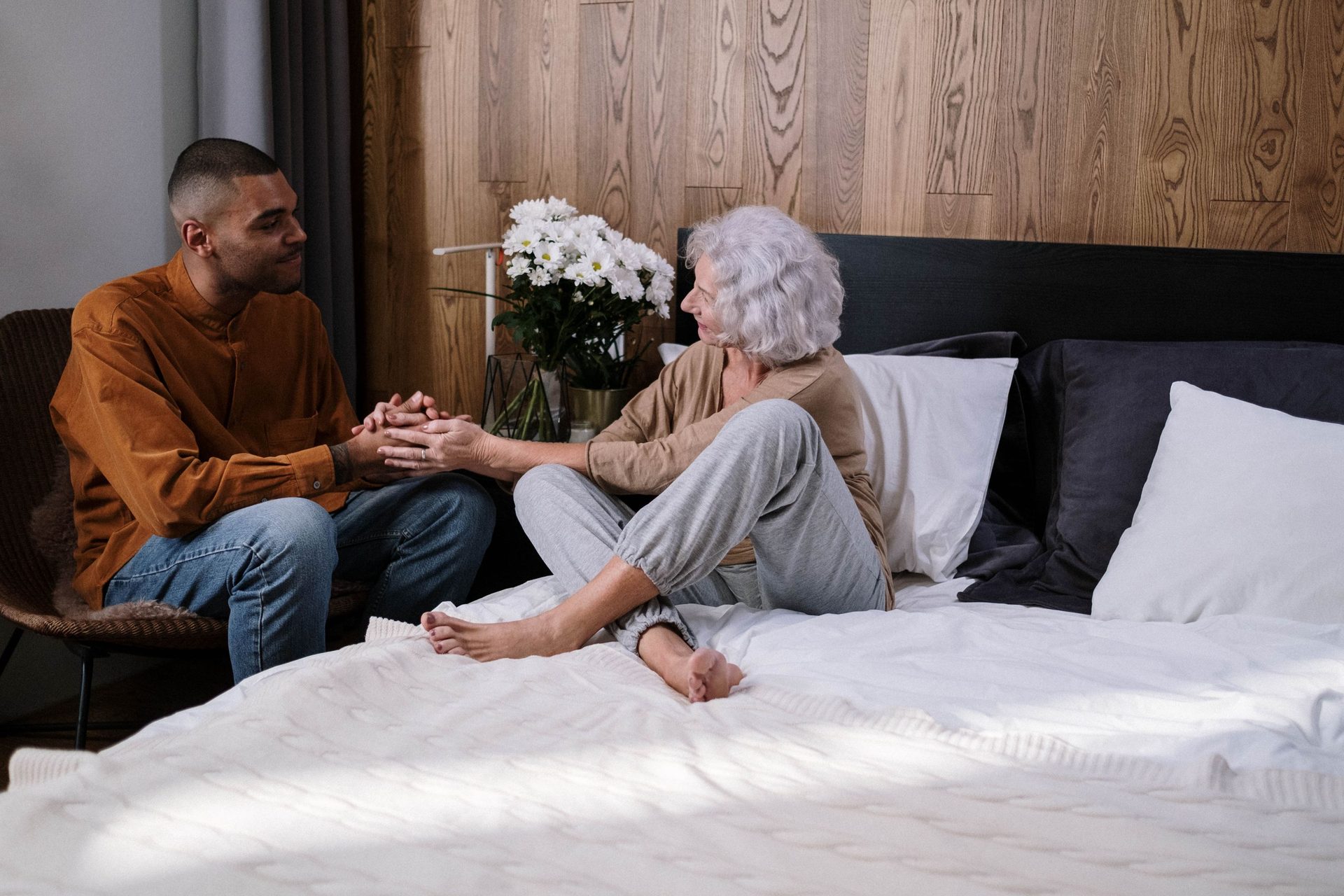
At home that means someone's own bed, their own room, their own light through their own window, and family able to come and go without visiting hours. It also means the people around them are not doing every wash, every turn and every night alone.
Is our palliative care the right support?
A good fit if
- the person wants to be cared for at home and the NHS team agrees that home can work
- the family needs hands-on help with personal care, comfort and the household, and some relief for themselves
- care can be planned as visits, or as live-in care where someone should not be alone
Not the right service if
- what is needed is nursing, such as syringe drivers, injections or symptom control. That is the district nurse, the hospice or the palliative care team
- you need someone awake through the night. We do not currently provide waking nights, so we will tell you straight away and you can ask the district nurse or hospice what night support runs locally
- you need an urgent medical response. Call the district nursing team or the hospice advice line if you have one, NHS 111, or 999 in an emergency
What we do
- Personal care, gently and at the person's pace, including washing, dressing and continence care
- Help with positioning, pressure area care and comfort
- Support with eating and drinking for as long as that is wanted, without pressure
- Medication support in line with the plan set by the GP and district nursing team
- Live-in care where someone should not be alone in the house. The carer sleeps at night, so this is a presence, not a waking night
- Daytime sitting, so a partner or son or daughter can rest, or leave the house for an hour
- Practical running of the household so the family are not also managing the washing
We work alongside the district nurses, the GP, the community palliative care team and the hospice where one is involved. We are the hands-on hours in between their visits, not a replacement for them.
Support for the family is part of the job. The person who is dying is not the only person being cared for. Partners and adult children in this situation are usually exhausted, frightened and trying to hold down the rest of their lives at the same time. Planning practical relief for them into the care is not an extra.
Who else is involved in south-east and east London
Good care at the end of life is a team effort, and families are often not told who is on the team. In the boroughs where our visiting carers work, it usually looks like this:
- The GP and the district nurses. The district nursing team, reached through the GP, looks after the nursing side: symptoms, syringe drivers and the medicines kept in the home for when symptoms change. They are the first call when something changes.
- The hospice. A hospice is not only a building with beds. St Christopher's Hospice in Sydenham, founded by Dame Cicely Saunders in 1967, serves Lewisham, Southwark, Bromley, Croydon and Lambeth, and supports most of its patients at home. Greenwich & Bexley Community Hospice on Bostall Hill covers Greenwich and Bexley and has a team at Queen Elizabeth Hospital, Woolwich. The St Joseph's Hospice community palliative care team, based on Mare Street in Hackney, covers Tower Hamlets, the City of London, Hackney and Newham. Elsewhere, the GP or district nurse will know which hospice covers the address.
- London's Universal Care Plan. A doctor or nurse can record the person's wishes, such as where they want to be cared for, on the Universal Care Plan. It can be seen by the London Ambulance Service, NHS 111 and out-of-hours GPs, so a 3am call does not start from nothing. The person can view their own plan in the NHS App.
- A ReSPECT form. Some teams also use ReSPECT, the Recommended Summary Plan for Emergency Care and Treatment. It records the person's preferences and clinical recommendations for a future emergency. It is not legally binding and can be changed.
- Night nursing. In some areas Marie Curie Nurses provide free overnight care at home, usually in the last weeks or days of life. It is reached only through a professional, so ask the GP or district nurse. Marie Curie's free Support Line is 0800 090 2309.
We fit in around all of this. Our carers follow the plan the NHS team sets, record what they see, and tell the district nurse when something changes. The NHS has a plain guide to end of life care that explains each of these services.
Arranging care quickly
These situations often move fast, sometimes with a hospital discharge in twenty-four hours. Urgent or short-notice starts are possible when we have capacity, so call us as early as you can, even if nothing is decided yet. We would rather have an early conversation that comes to nothing than get a call on the afternoon of a discharge. Our hospital discharge support page sets out how we plan for it.
Fast-track NHS Continuing Healthcare funding is available where someone has a rapidly deteriorating condition and may be approaching the end of life. It is not means tested, and the NHS says a care package should usually be in place within 48 hours. Attendance Allowance is also paid at the higher rate, £114.60 a week in 2026, where a doctor or other medical professional has said someone is nearing the end of life (GOV.UK, checked November 2026). Our guide to NHS Continuing Healthcare and our guide to paying for care explain it, and the district nurse or hospital palliative team can start the process.
Questions families ask
Can care be arranged at very short notice?
Call us and we will check as quickly as we can whether we can cover it. If we cannot staff it safely, we say so promptly, because in this situation a delayed no is much worse than a fast one.
Do you provide overnight care?
Not waking nights. A live-in carer is in the house overnight but sleeps, so they cannot sit up through the night. We do not currently provide carers who stay awake through the night. If the nights need someone awake, ask the district nurse or hospice whether Marie Curie or hospice night support runs in your area, and ask about fast-track NHS Continuing Healthcare. Our 24-hour care page explains the difference between sleeping and waking cover.
Is end of life care free on the NHS?
It can be. NHS Continuing Healthcare funds a full care package where someone's needs are primarily health needs, and the fast-track route exists for rapidly deteriorating conditions. It is not means tested. Ask the district nurse, GP or hospital palliative care team to begin a fast-track assessment.
Will the same carers come?
We keep the team as small and as consistent as we can. At this stage of someone's life a rotating cast of strangers is the last thing anyone needs.
Talk it through with Jackie
No call centre and no obligation. Tell us what you are dealing with and we will tell you honestly whether we can help. We arrange and provide care; we cannot advise on benefit claims.
Looking for work rather than care? Apply online or read about carer jobs in London. Referring as a professional? Use our referral route.
Ask us to call you back
Thank you. Your request has been sent and we will call you back as soon as we can.