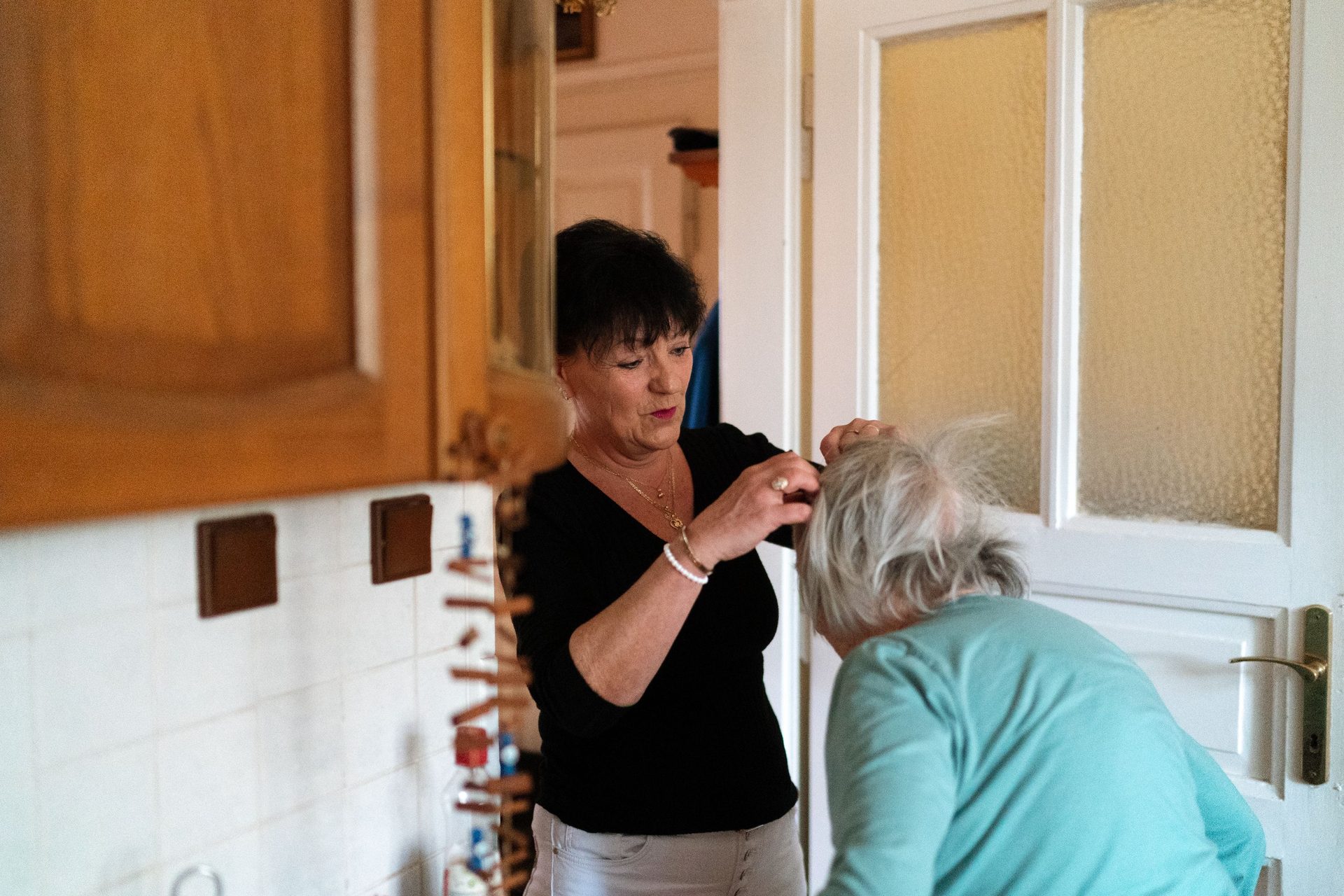
What Is Personal Care? Meaning, Examples and Your Rights
The legal definition of personal care, real examples, where home help ends, what dignity should look like, and who pays for it in London.
Personal care is hands-on help with the private, everyday tasks of looking after your body: eating and drinking, using the toilet, washing or bathing, dressing, cleaning teeth, and caring for skin, hair and nails. It also covers prompting and supervising someone through those tasks when they can no longer decide to do them alone, which can happen with dementia. In England it is a legally defined activity, and any agency that employs or manages the carers who provide it in someone's home must be registered with the Care Quality Commission (CQC).
Key points
- The legal test is simple: is a carer physically helping with one of six body-related tasks, or prompting and supervising someone who can't decide to do them alone? If yes, it is personal care.
- Cleaning, laundry, shopping, cooking, company and medication reminders are not personal care on their own. That is home help or companionship, and it is not regulated in the same way.
- Before you pay anyone, check them on the CQC register. Introductory agencies and matching platforms with no ongoing role, and carers your parent employs directly, don't have to register, so you carry more of the responsibility.
- Your parent can ask for a carer of a particular sex for intimate care. CQC guidance says providers must make every reasonable effort to respect that.
- Councils in England can charge for personal care at home after a financial assessment, and each one sets its own charging policy. The value of the home your parent lives in is ignored when the council charges for care at home.
- Attendance Allowance (£76.70 or £114.60 a week in 2026/27) is not means-tested. If the council arranges and charges for your parent's care, it can count the allowance as income.
What is personal care, in plain terms?
Think of the things you do behind a closed door: in the bathroom, getting dressed, at the sink in the morning. When someone needs help with those because of age, illness or disability, that help is personal care.
The legal definition comes from the regulations that set out what the CQC oversees. Regulation 2 of the Health and Social Care Act 2008 (Regulated Activities) Regulations 2014 defines personal care as:
- physical assistance given to a person in connection with:
- eating or drinking (including the maintenance of established parenteral nutrition, meaning nutrition given into a vein);
- toileting (including help related to periods);
- washing or bathing;
- dressing;
- oral care;
- the care of skin, hair and nails (except nail care given by a registered chiropodist or podiatrist); or
- prompting, together with supervision, of a person in any of those tasks, where that person is unable to make a decision for themselves to do the task without the prompting and supervision.
Schedule 1 of the same regulations adds the condition that makes it a regulated activity: the care is for people who can't provide it for themselves because of old age, illness or disability, and it is given where they live.
These regulations only cover care in England. Scotland, Wales and Northern Ireland have their own rules.
The part most guides leave out: prompting with supervision
The second half of the definition matters if your parent has dementia. Suppose Dad has dementia and can still physically wash and dress, but left alone he will put on yesterday's clothes or forget to wash at all. A carer who stands with him, suggests the next step and makes sure it gets done is giving personal care, even though they never touch him. A reminder by phone, with nobody checking, is not: the test is prompting and supervision.
What does personal care include? Everyday examples
Here is how the legal categories turn into a real morning or evening visit.
| Area | Personal care | Not personal care on its own |
|---|---|---|
| Eating and drinking | Cutting food up, helping someone hold a cup, assisting them to eat | Shopping, cooking a meal and leaving it on the table |
| Toileting | Help on and off the toilet or commode, changing continence pads, cleaning up after an accident | Buying continence products |
| Washing and bathing | Help in and out of the shower, a strip wash or bed bath, washing hair | Cleaning the bathroom |
| Dressing | Help with buttons, socks, shoes, compression stockings; undressing at night | Laundry and ironing |
| Oral care | Brushing teeth, cleaning dentures, mouth care for someone in bed | Booking a dentist |
| Skin, hair and nails | Shaving, brushing hair, applying cream to dry skin, trimming fingernails | Nail care given by a registered chiropodist or podiatrist (excluded from the definition) |
Mobility help on its own isn't one of the six tasks. When it is part of one, such as helping your parent out of bed and into the shower, the regulations treat it as part of the personal care, so a care plan describes them together.
What about medication?
CQC guidance says a service that only administers, prompts or supervises medicines, with no personal care tasks, doesn't need to register for personal care. Both can be given in the same visit. See our medication support service.
How is personal care different from home help?
The NHS describes homecare as a carer helping with things like getting out of bed, washing and dressing, and treats help with cleaning, laundry and gardening as separate. Most councils don't provide that household help, it notes.
The CQC draws the same line: a service providing only housing or social support, such as help with shopping, doesn't need to register. For families, that means:
- Regulation. An agency doing personal care must be CQC-registered. A cleaner or a befriending service doing only domestic or social tasks doesn't have to be.
- Council support. Four of the ten outcomes in the national eligibility rules overlap with personal care: maintaining personal hygiene, managing toilet needs, being appropriately clothed and managing nutrition. Needs with personal care map directly onto these outcomes, so they are part of what the assessor looks at.
- Who you need. If the only gaps are housework and shopping, a home help service may be enough. Once someone needs help in the bathroom, you need a carer trained in personal care and moving and handling.
Care packages can combine both. See our home help service for the domestic side.
Who is allowed to provide personal care?
The NHS says all homecare agencies must register with the CQC. But the regulations exempt some arrangements, and some matching platforms and introductory services may not be registered.
Regulated: a home care agency
A registered agency employs or manages the carers. CQC guidance lists its ongoing responsibilities: choosing suitable workers, training and supervising them, managing the work, and monitoring the quality and safety of the service.
Not regulated by the CQC
- Introductory agencies, employment agencies and matching platforms that introduce a carer and then have no ongoing role in directing the care.
- A carer or personal assistant you employ directly, working wholly under your parent's direction (or that of a "related third party" such as an attorney), with no agency managing them.
None of these options is wrong, but check before you sign. With an introductory agency or a directly employed carer, nobody else is responsible for training, supervision or cover. The NHS points out that if you employ a carer yourself, you become their employer, including arranging cover when they're off. Search the provider's name on the CQC website to see whether it is registered.
Your rights during personal care: dignity, privacy and choice
Every CQC-registered provider must meet Regulation 10, which requires people to be treated with dignity and respect. The CQC's guidance on it makes a good checklist when you meet an agency:
- Privacy. Staff must make sure people have privacy when they are supported to wash, bathe and use the toilet. In practice: door closed, curtains drawn, and only the part of the body being washed uncovered.
- Who gives intimate care. Providers must make every reasonable effort to respect a person's preference about who delivers intimate or personal care, such as asking for a carer of a particular sex.
- How people are addressed. Your parent should be called what they prefer: "Mrs Okafor", "Pat", "Grandad".
- Choices respected. Bath or shower, morning or evening, which clothes, which soap. Staff must respect personal preferences and lifestyle.
- Never left in an undignified situation. The guidance says people must not be neglected or left undignified. Think of someone left in wet clothes, or half-dressed when the carer leaves.
Doing with, not doing for
NICE's home care guideline asks services to focus on what people can do, or would like to do, to stay independent, and not only on what they can't. In a bathroom that means the carer runs the water and steadies the step while Mum washes her own face. That takes time. NICE recommends visits shorter than half an hour only where the carer is known to the person, the visit is part of a wider package of support, and there is enough time for specific, time-limited tasks or a check that the person is safe and well. It also recommends continuity, so the person sees the same care worker or workers.
When your parent doesn't want help
Help with washing can be the hardest kind to accept. If your parent has capacity, the decision is theirs. If they have dementia and are refusing, our guide on when a parent with dementia refuses care covers gentle introductions and the Mental Capacity Act.
If a carer or family member notices sore or broken skin, a sudden change in continence, signs of pain, or new confusion during personal care, contact the GP. Call NHS 111 if you're unsure what to do, or 999 in an emergency.
How do you get personal care, and who pays?
Ask the council for a needs assessment. The NHS says it is free and anyone can ask for one. Your parent has eligible needs if those needs arise from a physical or mental impairment or illness, mean they can't achieve two or more of ten set outcomes, and as a result have, or are likely to have, a significant impact on their wellbeing.
"Can't achieve" includes managing a task only with significant pain, distress or anxiety, unsafely, or taking much longer than normal. Our care needs assessment guide explains how to prepare. The council must make sure eligible needs are met, but that doesn't make the care free.
Expect a financial assessment. The Care Act 2014 allows councils to charge for care and support. The NHS says someone with savings over £23,250 will generally pay for their own care, and that nobody has to sell their home to pay for help in their own home. Each borough sets its own charging policy within the national rules, so check your council's "paying for care at home" page.
Check what is free. Reablement after illness or a hospital stay is free for up to six weeks under the national charging regulations. If your parent is eligible for NHS continuing healthcare, the NHS arranges and funds their care in full, including at home.
Claim Attendance Allowance. It is for people who have reached State Pension age and have needed help caring for themselves, or someone to supervise them, for at least six months. In 2026/27 it is £76.70 a week (lower rate) or £114.60 (higher rate). The government's proposed rates for 2027/28 are £79.40 and £118.60 from April 2027; the current rates apply until then. It is not means-tested, and your parent doesn't need to have a carer already to claim. (If your parent is nearing the end of life, and a doctor or other medical professional has said they might have 12 months or less to live, they can claim under the special rules for end of life without the six-month wait, at the higher rate.)
If the council arranges your parent's care and charges for it, the financial assessment can count Attendance Allowance as income. Statutory guidance says the council should then assess your parent's disability-related costs that it isn't meeting, such as a community alarm or extra heating, and let them keep enough of the allowance to pay for them. If you pay privately, your parent can spend the allowance however they choose, including on care.
Get quotes from registered providers. If you are paying privately, read our guide to what home care costs in London, then use our checklist for choosing a home care agency.
Will personal care become free? Not yet. On 29 September 2026 the government announced plans for a National Care Service providing free personal care for older people, introduced in phases in the next Parliament. Bed and board would stay means-tested. Nothing has changed in law, so plan on today's rules.
For the full picture of council funding, benefits and NHS money in the capital, see paying for care in London.
Questions families ask
Is cutting toenails personal care?
Yes. Trimming toenails is care of the nails, which is in the legal definition, unless a registered chiropodist or podiatrist does it. The NHS warns that foot problems can be more serious for people with diabetes. If your parent has diabetes, or nails that are thick, ingrown or painful, ask the GP or a podiatrist for advice before anyone else trims them. See our nail care service.
Is helping with meals personal care?
Physically helping someone eat or drink is. Shopping and cooking on their own are not. A visit can combine the two, so a carer might cook lunch and then help your parent eat it.
Do I need training or registration to give my parent personal care?
No. The regulations exclude care given in a family or personal relationship for no commercial consideration, so you don't need to register with the CQC, and the training rules for care agencies don't apply to you. If a relative is being paid to provide care, ask the council how the rules apply.
If you're caring regularly, ask the council for a carer's assessment. Under the Care Act, it must assess any carer who appears to need support. The NHS says the assessment is free, anyone over 18 can ask for one, and it can be done alongside your parent's needs assessment. It can lead to support such as training in how to lift safely.
Is personal care the same as nursing care?
No. The CQC lists nursing care as a separate regulated activity. Personal care is the everyday help described in this guide. If your parent also has health needs, such as wounds or a catheter, ask the GP or nurse which tasks need a nurse, and make sure the care plan says who does what.
Can personal care be provided by a live-in carer?
Yes. The legal definition only requires that care is given where the person lives, so visiting carers and live-in carers both provide personal care. The difference is how often someone is there.
How we can help
JNP Sidona is a CQC-registered home care agency on Lewisham High Street, and personal care is the regulated activity we are registered for. We were registered in October 2023. When we last checked our CQC page, on 26 November 2026, CQC had not yet inspected us, so we did not have a rating. Jackie, our registered manager, will visit for a free home assessment, look at the bathroom and the routine, and ask your parent how they want things done, including who they would prefer to help them. You then get a written care plan and a quote. Read more about our personal care service in London.
Sources
- legislation.gov.uk: The Health and Social Care Act 2008 (Regulated Activities) Regulations 2014, regulation 2, checked 26 November 2026
- legislation.gov.uk: The Health and Social Care Act 2008 (Regulated Activities) Regulations 2014, regulation 3 (activities in England; ancillary activities), checked 26 November 2026
- legislation.gov.uk: The Health and Social Care Act 2008 (Regulated Activities) Regulations 2014, Schedule 1, checked 26 November 2026
- legislation.gov.uk: The Health and Social Care Act 2008 (Regulated Activities) Regulations 2014, Schedule 2, paragraph 1 (family and personal relationships), checked 26 November 2026
- CQC: Scope of registration, Personal care, checked 26 November 2026
- CQC: Personal care, ongoing role, introductory agencies and individual care workers, checked 26 November 2026
- CQC: Regulation 10, Dignity and respect, checked 26 November 2026
- NICE: Home care, delivering personal care and practical support to older people living in their own homes (NG21), recommendations, checked 26 November 2026
- NHS: Homecare, checked 26 November 2026
- legislation.gov.uk: The Care and Support (Eligibility Criteria) Regulations 2015, regulation 2, checked 26 November 2026
- NHS: Getting a needs assessment, checked 26 November 2026
- legislation.gov.uk: Care Act 2014, section 14 (Power of local authority to charge), checked 26 November 2026
- NHS: Paying for your own care (self-funding), checked 26 November 2026
- legislation.gov.uk: The Care and Support (Charging and Assessment of Resources) Regulations 2014, regulation 3, checked 26 November 2026
- GOV.UK: Care and support statutory guidance, chapter 8 (para 8.42) and Annex C (para 39, disability-related expenditure), checked 26 November 2026
- legislation.gov.uk: The Care and Support (Charging and Assessment of Resources) Regulations 2014, Schedule 2, paragraph 6 (home disregarded for care at home), checked 26 November 2026
- NHS: NHS continuing healthcare, checked 26 November 2026
- GOV.UK: Attendance Allowance, what you'll get, checked 26 November 2026
- GOV.UK (DWP): Proposed benefit and pension rates 2027 to 2028 (published 11 November 2026), checked 26 November 2026
- GOV.UK: Attendance Allowance, eligibility, checked 26 November 2026
- GOV.UK: Claiming Attendance Allowance if you're nearing the end of life, checked 26 November 2026
- NHS: Carer's assessments, checked 26 November 2026
- legislation.gov.uk: Care Act 2014, section 10 (Assessment of a carer's needs for support), checked 26 November 2026
- NHS: Ingrown toenail, checked 26 November 2026
- CQC: Find care services, checked 26 November 2026
- GOV.UK: Prime Minister sets out plans for a new National Care Service (29 September 2026), checked 26 November 2026
- CQC: JNP Sidona Support Services Ltd, service page, checked 26 November 2026
Talk to Jackie about care at home: ask for a call back or call 07446 010486.
Keep reading
Related guides


Talk it through with Jackie
No call centre and no obligation. Tell us what you are dealing with and we will tell you honestly whether we can help. We arrange and provide care; we cannot advise on benefit claims.
Looking for work rather than care? Apply online or read about carer jobs in London. Referring as a professional? Use our referral route.
Ask us to call you back
Thank you. Your request has been sent and we will call you back as soon as we can.