Post-Operative Care at Home in London
Post-operative care at home is practical help in the weeks after an operation: washing, dressing, getting in and out of bed and chairs, meals, reminders to take medication, and getting to follow-up appointments. We provide personal care, not nursing: a trained carer can help with simple dressings a district nurse has delegated and signed off, while complex wound care and injections stay with the nurses. Call us when the operation date is set; visits are strongest in Bexley, the City of London, Greenwich, Lewisham, Southwark, Tower Hamlets and Westminster, and live-in care works anywhere in London.
What care at home after surgery covers
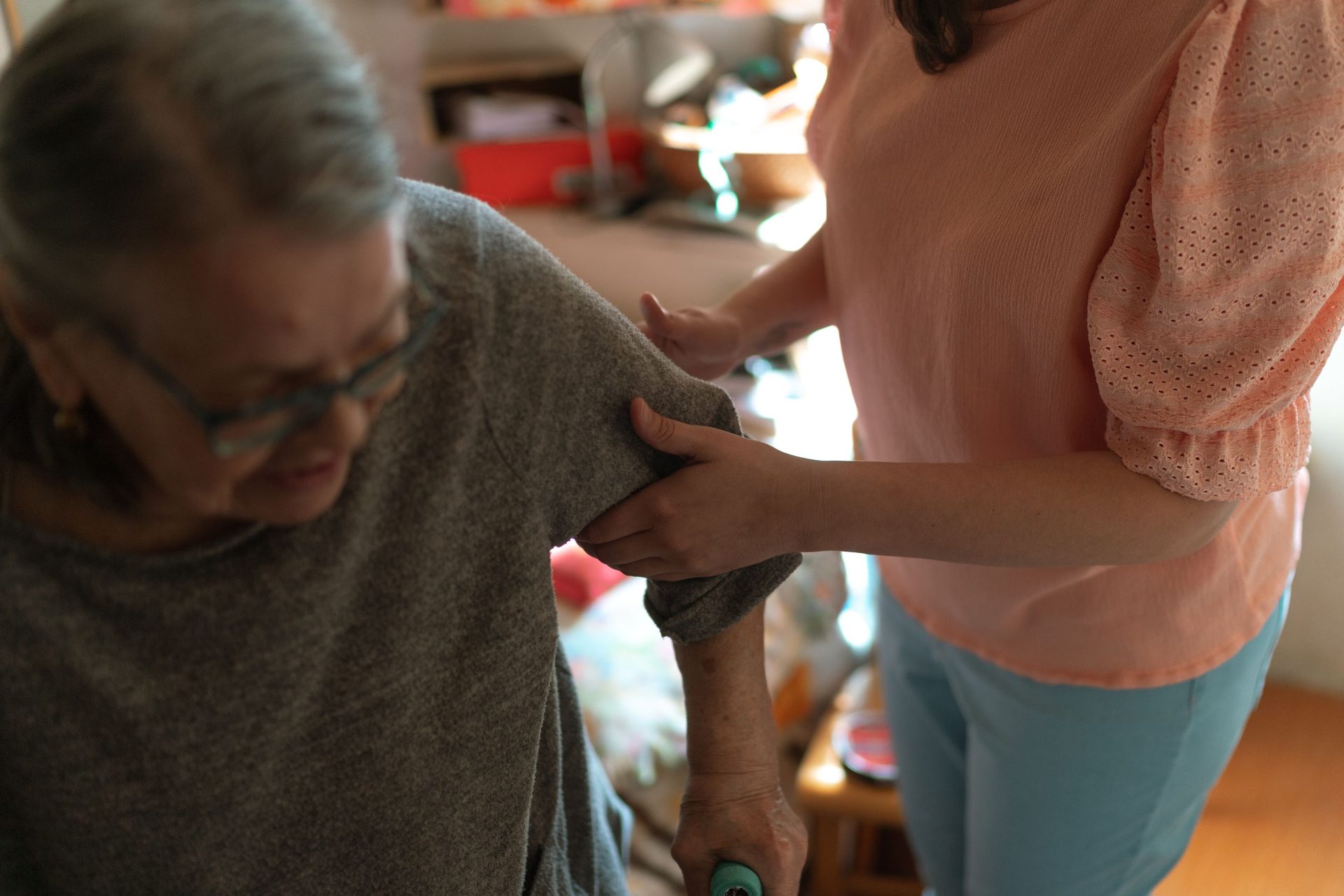
After a hip or knee replacement, abdominal surgery, a hysterectomy, heart surgery or an operation on a broken wrist or ankle, most people go home sore, tired and with rules about what they must not do for a while: no bending past a certain angle, no lifting, no driving, no weight on one leg. The jobs that were easy a week ago, such as getting into the shower, putting on socks or carrying a cup of tea from the kitchen, become the risky part of the day. That is where a carer helps:
- Washing and dressing within the movement limits the surgical team has given, including help in and out of the shower or with a strip wash while the wound must stay dry
- The toilet, using the raised seat, frame or commode the hospital has supplied
- Getting up, sitting down and moving about safely with the walking frame or crutches, and keeping walkways clear
- Meals and drinks, shopping and light housework while standing or carrying is hard
- Medication prompts, including pain relief, at the times written on the discharge letter, recorded at each visit (see medication support)
- Encouragement with the exercises the physiotherapist has set, without taking the physiotherapist's place
- Follow-up appointments: a carer can go with the person to the fracture clinic, the GP or the outpatient check, and write down what was said (see escort to appointments)
- A second pair of eyes for things that need the GP, the ward's helpline or NHS 111, such as new pain, a fever or a wound that looks worse
What our carers do not do after an operation
We are registered with the CQC for personal care. That covers the help above. It does not cover nursing. Where a district nurse has delegated a simple dressing to a carer, trained them and signed them off for that person, the carer can help with it, and it is written into the care plan. Our carers do not:
- look after a complex or surgical wound, or make decisions about how a wound is healing
- give injections, such as the blood-thinning injections some people are sent home with
- remove stitches, clips or staples
- manage drains, catheters that need nursing care, or anything the surgical team describes as a nursing task
Those jobs belong to the district nurse or the practice nurse, or to the hospital's own clinic. The ward should arrange them before the person leaves, so ask who is doing them and when. Our carers will tell you, and the nurse, if something looks wrong. Our guide to what a home carer and a nurse each do explains the difference.
Call before the operation, not after. A planned operation gives you a date. If you ring us when it is set, Jackie, our registered manager, can do the free home assessment while the person can still show us how they manage the stairs, the bathroom and the kitchen, and the first visit can be booked for the day they come home.
How do I arrange care at home after surgery?
- Call or WhatsApp us on 07446 010486, or send a message, with the operation date, the hospital and the address.
- A free home assessment before the operation if possible: the stairs, the bathroom, where the bed is, and who else is at home.
- A written care plan and quote, built around the instructions the hospital gives you, such as how long the movement limits last.
- Care starts on the day home. We adjust the visits as the person gets stronger, and stop them when they are no longer needed.
We will tell you plainly whether we can staff it before you rely on us. If the discharge date moves, tell us as soon as the ward tells you.
Coming home from a private hospital
Many people in south-east and central London have planned surgery privately, paid for themselves, through insurance, or as NHS patients sent to a private hospital for their operation. Near us that includes The Blackheath Hospital on Lee Terrace, SE3 (Circle Health Group), London Bridge Hospital on Tooley Street, SE1, and The Lister Hospital on Chelsea Bridge Road, SW1 (both HCA Healthcare UK). We are not connected to any of these hospitals and have no arrangement with them. You can ask any of them about care at home from us, or from anyone else.
A private stay can be short, so the person may be home sooner after surgery than they expect, still sore, on new pain relief and not allowed to bend, lift or drive. With the patient's agreement, we can speak to the hospital's ward or discharge coordinator before the operation and again before discharge, so that the care at home matches what they say. The questions worth asking them:
- What is the expected discharge date and time, and who is collecting the person?
- Which movements are restricted, and for how long?
- What equipment is needed at home, such as a frame, a raised toilet seat or a perching stool, and who is supplying it?
- Which medicines go home with the person, and which existing tablets have changed?
- Who changes the dressings and removes the stitches or clips? A nurse decides this, and can delegate a simple dressing to a trained carer.
- Who do we call at the hospital if something worries us after the person gets home?
Do not assume the free NHS and council reablement described below will follow a private operation. Ask the hospital what, if anything, it has arranged. If more help is needed, the council where the person lives can carry out a needs assessment, and the GP can refer to community services such as the district nurses.
After surgery at an NHS hospital
In our part of London, planned and emergency operations often happen at University Hospital Lewisham, Queen Elizabeth in Woolwich, King's College Hospital, or Guy's and St Thomas' (Guy's Hospital is in Southwark, by London Bridge). NHS patients go home under the same discharge rules as any other hospital stay, which our hospital discharge care page explains, including the pathway system and what to ask the ward.
If the hospital and council arrange reablement or intermediate care, it is free. Under regulation 3 of the Care and Support (Charging and Assessment of Resources) Regulations 2014, councils cannot charge for it for the first six weeks, and the NHS describes this care to support recovery as lasting only as long as it is needed. We can work alongside it if it does not cover everything, or take over when it ends so there is no gap.
Convalescent care: the first weeks back
Convalescence used to mean a stay somewhere quiet to recover. For most people now it means recovering at home, with enough help that they rest, eat and do their exercises. The help needed usually changes quickly:
- The first days: often help at each point of the day, getting up and washed, lunch, and getting ready for bed.
- The next weeks: fewer visits as confidence returns, perhaps only a morning wash and a shop.
- When the limits lift: the care plan is reviewed and visits stop, or carry on at a lower level if the operation has shown that ongoing help is needed.
Someone who lives alone, has steep stairs, or should not be on their own at night in the first weeks may be better with a live-in carer for a short period. The carer lives in the home, takes a daily break and sleeps at night. If the person will need help most nights, tell us at the assessment, because that needs a different arrangement.
Who pays for care after an operation?
- Privately. Most short post-operative care is paid for by the person or family. We give a written quote after the free assessment.
- Health insurance. Some policies include help at home after surgery and many do not. Ask your insurer before the operation, and get the answer in writing.
- The NHS and council. Reablement after an NHS hospital stay is free for up to six weeks, as above. Longer-term care is assessed and means-tested by the council.
- A direct payment. If the council is funding care, a direct payment can pay us. See using your direct payment with us.
Our page on paying for care in London sets out each route.
Where we provide post-operative care
- Visiting care: most realistic in Bexley, the City of London, Greenwich, Lewisham, Southwark, Tower Hamlets and Westminster
- When carers are free: Barking and Dagenham, Bromley, Camden, Croydon, Dartford, Hackney, Hammersmith and Fulham, Haringey, Islington, Kensington and Chelsea, Lambeth, Merton, Newham, Redbridge, Waltham Forest and Wandsworth
- Live-in care: anywhere in Greater London
Visits depend on having carers near the address, so tell us the postcode first and we will say honestly what we can do.
Questions about care after surgery
Can your carer change my mother's dressing after her operation?
Only a simple dressing, and only once a district nurse has delegated it, trained the carer and signed them off for her, within her written care plan. We provide personal care, not nursing, so complex wound care, injections and decisions about the wound stay with the nurses. The ward should arrange the district nurse or practice nurse before she leaves. Our carer can help her wash around the dressing as the nurses advise, and will tell you and the nurse if anything about it worries them.
Can you help with hip precautions after a hip replacement?
Yes. If the surgical team or physiotherapist has given movement limits, we write them into the care plan, and the carer helps with washing, dressing and the toilet in ways that keep to them, using the equipment the hospital supplied. The rules themselves come from the hospital, so bring the discharge letter to the assessment.
Can a carer take my father to his follow-up appointment?
Yes, where we can staff it. A carer can go with him to the fracture clinic, the outpatient check or the GP, wait with him and write down what was said. Tell us the date as soon as the appointment letter arrives.
Can we book care for just two or three weeks after surgery?
How long care lasts depends on the person's needs and how recovery is expected to go, so we agree the length with you at the free home assessment. Short-term care after an operation is a normal reason to call, and the plan is reviewed as the person recovers. We will tell you at the assessment how we would staff it and how any change or ending is handled.
My husband is having private surgery. Will the hospital arrange care at home?
Do not assume it. Ask the hospital what it arranges after discharge. We have no arrangement with any private hospital, so if you want care from us, call us yourself and tell the ward that care is booked.
Private hospital names and addresses checked on the NHS website and HCA Healthcare UK's website on 26 November 2026. Charging rules checked on legislation.gov.uk and the NHS website on 26 November 2026.
Talk it through with Jackie
No call centre and no obligation. Tell us what you are dealing with and we will tell you honestly whether we can help. We arrange and provide care; we cannot advise on benefit claims.
Looking for work rather than care? Apply online or read about carer jobs in London. Referring as a professional? Use our referral route.
Ask us to call you back
Thank you. Your request has been sent and we will call you back as soon as we can.