Home Care After a Fall in London
After a fall, get the person checked first: call 999 if they may have hurt their head, back, neck or hip, or cannot get up, and NHS 111 or the GP otherwise. Then ask the GP about the local NHS falls service and plan the next few days, because a fall often changes what someone can safely manage on their own. We can help with visits in Bexley, the City of London, Greenwich, Lewisham, Southwark, Tower Hamlets and Westminster, or a live-in carer anywhere in London, after a free home assessment.
If someone has just fallen
The NHS falls page says to call 999 if the person may have injured their head, back, neck or hip, or cannot get up. If they are not hurt, it advises taking time before getting up, not getting up too quickly, and seeing a GP after any fall. For advice when it is not an emergency, call NHS 111.
We are not an emergency service, and we cannot send a carer to someone who is on the floor now. If that is happening, call 999.
The first days after a fall: what to sort out
Even a fall with no injury can change things. The person may be bruised, frightened of falling again, or reluctant to tell anyone how it happened. These are the jobs worth doing in the first week, whether or not care from us is part of it:
- See the GP. Ask why the fall happened: a new tablet, low blood pressure on standing, an infection, poor eyesight or weak legs. The NHS says a GP may refer the person to a specialist falls service.
- Ask for a falls assessment. NICE guidance on falls (NG249, 2025) recommends a comprehensive falls assessment for older people who have fallen in the last year and meet certain criteria. The local falls services are listed below.
- Make the night safer. Night-time trips to the toilet are a risky moment for many people: a clear path, a night light, and a commode or urinal by the bed if the GP or occupational therapist suggests one.
- Think about an alarm. The NHS explains that personal alarms let someone get help if they have a fall at home. A key safe lets a carer, neighbour or paramedic get in.
- Ask the council for a needs assessment. It can lead to equipment, adaptations and care. Under the care and support statutory guidance, councils must not charge for aids, or for minor adaptations costing £1,000 or less.
- Decide who checks in. If family cannot be there each morning and evening, that gap is where care at home fits.
NHS falls services in our core boroughs
Each area runs its own service, with its own referral route. These are the ones in the boroughs where our visiting carers are most often available.
- Lewisham. The Lewisham Community Falls Service is for people aged 65 and over who have fallen or feel at risk. People can refer themselves on 020 3049 4493, and GPs and health professionals use a referral form. Lewisham Council's Linkline alarm service had a home response charge of £7.08 a week plus a £35 installation fee when we checked the council's page on 4 November 2026.
- Greenwich. The council's 2025 carers' guide lists a falls prevention service run by Oxleas NHS Foundation Trust; ask the GP to refer. Royal Greenwich runs its own telecare service with alarms and sensors.
- Southwark. Guy's and St Thomas' runs a community rehabilitation and falls service, with a falls clinic at the Whittington Centre and strength and balance classes in Lambeth and Southwark. Its referral guide says it accepts referrals from GPs, community nurses, social workers and relatives, and that patients can refer themselves. The council's alarm service is SMART, the Southwark Monitoring and Alarm Response Team.
- Bexley. Oxleas' community rehabilitation team for Bexley covers people who would benefit from specialist falls prevention advice. It takes referrals from GPs and health and social care professionals, and is for people who are housebound and registered with a Bexley GP. Bexley Council's telecare costs approximately £10 a week, according to the council, subject to a financial assessment.
- Tower Hamlets. East London NHS Foundation Trust's community health services include a falls pick-up service and community therapy, through the single point of access on 0300 033 5000. For people aged 50 and over, Toynbee Hall and Age UK East London run healthy living workshops that include falls prevention.
Elsewhere in London, ask the GP which falls service covers the address.
How home care helps after a fall
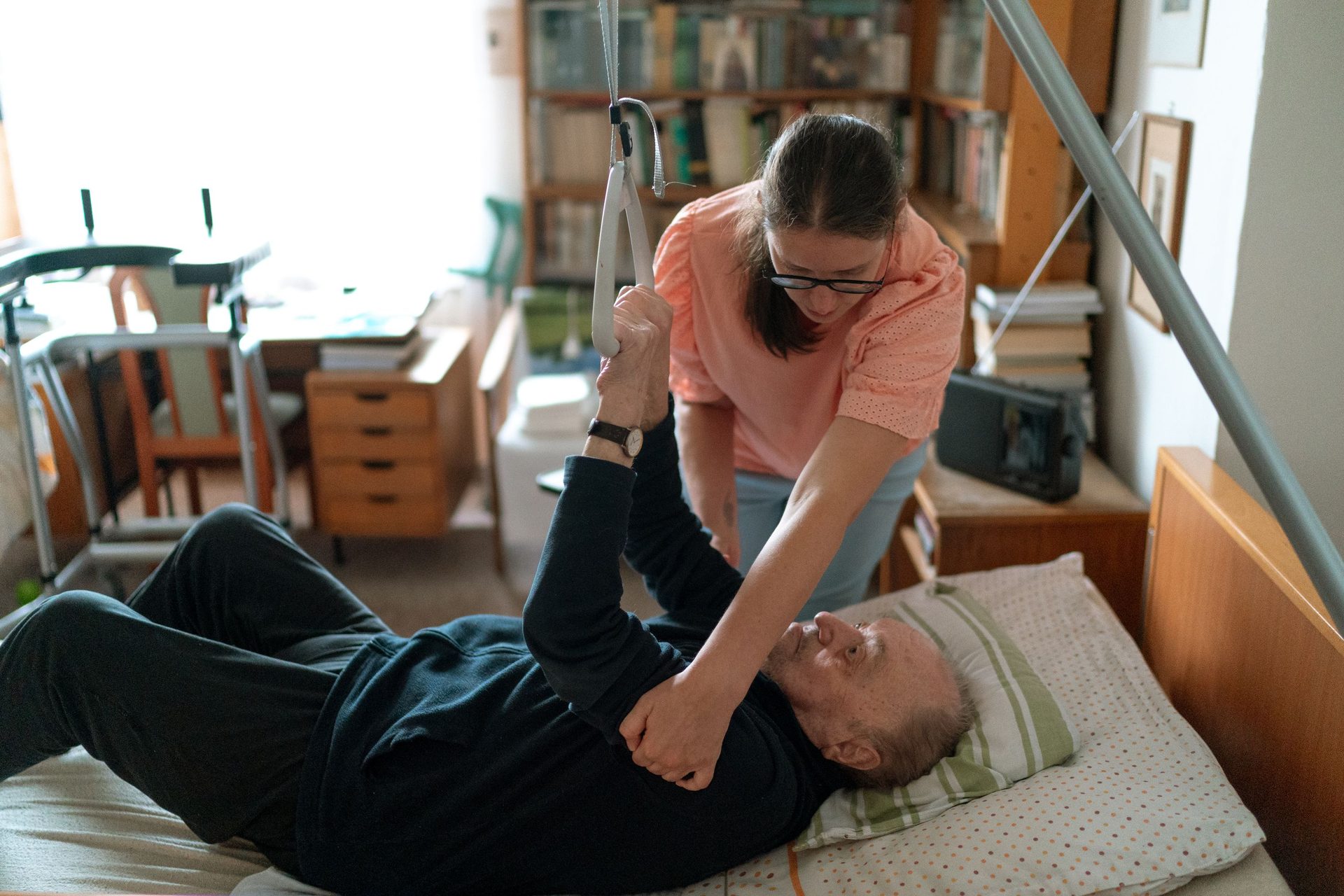
Care after a fall is about the parts of the day when the person is most likely to fall again, and the things they have stopped doing because they are frightened to:
- Getting up and going to bed, when people are stiff, sleepy or rushing to the toilet
- Washing and dressing, including help in and out of the shower or bath (see personal care)
- Meals and drinks, because skipping food and fluids makes dizziness worse
- Medication prompts at the right times, and telling the GP if a new tablet seems to make the person unsteady (see medication support)
- Keeping the home safe: clutter off the floor, rugs and cables out of the way, the night light on
- Encouraging the exercises a physiotherapist or falls service has set
- Getting to appointments at the GP, falls clinic or fracture clinic (see escort to appointments)
- Company and confidence, including a walk outside with someone alongside
Our carers write a note after each visit, so the family can see how the person has been. If a carer finds someone on the floor, they check for injuries first, then decide with the person what to do. If the person is hurt, or the carer is unsure, they call 999 or NHS 111. If not, they help the person up only if it is safe to do so, and they always tell the family.
Visits or a live-in carer?
Visits at set times suit someone who is steady most of the day and needs help at the risky moments. Visiting care depends on carers being near the address:
- Regular visits: Bexley, the City of London, Greenwich, Lewisham, Southwark, Tower Hamlets and Westminster
- When carers are free: Barking and Dagenham, Bromley, Camden, Croydon, Dartford, Hackney, Hammersmith and Fulham, Haringey, Islington, Kensington and Chelsea, Lambeth, Merton, Newham, Redbridge, Waltham Forest and Wandsworth
If the person should not be on their own for long, has fallen more than once, or lives somewhere our visiting carers do not reach, a live-in carer may suit better, anywhere in London. The carer lives in the home, takes a daily break and sleeps at night. If someone needs help getting up most nights, tell us at the assessment, because one live-in carer cannot do that every night.
Need care to start soon? Call us. We will tell you honestly whether we can staff it and from when. Urgent or short-notice starts are possible when we have capacity; see urgent and short-notice care. If someone is hurt or unwell now, call 999 or NHS 111.
If the fall led to a hospital stay
If the person was admitted, for example with a broken hip or wrist, the discharge plan comes first. The council and NHS may arrange reablement, which is free for up to six weeks, and we can work alongside it or take over when it ends. Our hospital discharge care page explains how that works, and if there was an operation, see post-operative care at home.
Who pays for care after a fall?
- The council may fund care after a needs assessment and a financial assessment, and can give a direct payment so you choose the provider.
- Privately, which many families do while they wait for an assessment. We give a written quote after the free home assessment.
- Attendance Allowance is not means-tested and can go towards care. The person must usually have needed help for at least six months before it is paid; see GOV.UK's eligibility rules.
Our page on paying for care in London sets out each route, and our guide to falls prevention at home goes through the home safety checks room by room.
Questions families ask after a fall
Mum fell but says she is fine. Does she still need to see someone?
The NHS advises seeing a GP after a fall, even without an obvious injury, because the reason for the fall matters as much as the bruise. Call 999 instead if she may have hurt her head, back, neck or hip, or could not get up.
Can you start care the day after a fall?
Sometimes, when we have capacity. Call us, tell us the address and what happened, and we will tell you plainly whether we can staff it and from when. We still do a home assessment first, so we know how the person moves and what help they need.
Is a personal alarm enough on its own?
For some people, yes: an alarm gets help after a fall. It does not stop the next one, and it only works if the person wears it and presses it. If falls are happening during washing, dressing or getting to the toilet, help at those times may matter more.
Dad keeps falling at night. Can you help?
Tell the GP first, because repeated night-time falls often have a cause that can be treated. We can help with a safe bedtime routine and a morning visit, or a live-in carer who is in the house overnight. A live-in carer sleeps at night, so if he needs help most nights, we will tell you honestly what arrangement that needs.
What does your carer do if they arrive and find Mum on the floor?
Check her for injuries before anything else, then talk with her about what to do next. If she is hurt, or the carer is not sure, they ring 999 or NHS 111. If she is unhurt, they help her up only when it is safe to do so. Either way, the carer lets you know.
Who pays for grab rails and other equipment after a fall?
Ask the council for an assessment first. Councils must not charge for aids, or for minor adaptations costing £1,000 or less, when they assess a need for them. Bigger changes, such as a level-access shower, may qualify for a Disabled Facilities Grant.
NHS, NICE and falls service details checked on the NHS, NICE, Guy's and St Thomas', Lewisham and Greenwich NHS Trust and Oxleas websites on 26 November 2026. Council telecare details from the councils' websites, checked 4 November 2026.
Talk it through with Jackie
No call centre and no obligation. Tell us what you are dealing with and we will tell you honestly whether we can help. We arrange and provide care; we cannot advise on benefit claims.
Looking for work rather than care? Apply online or read about carer jobs in London. Referring as a professional? Use our referral route.
Ask us to call you back
Thank you. Your request has been sent and we will call you back as soon as we can.