Stroke Care at Home in London
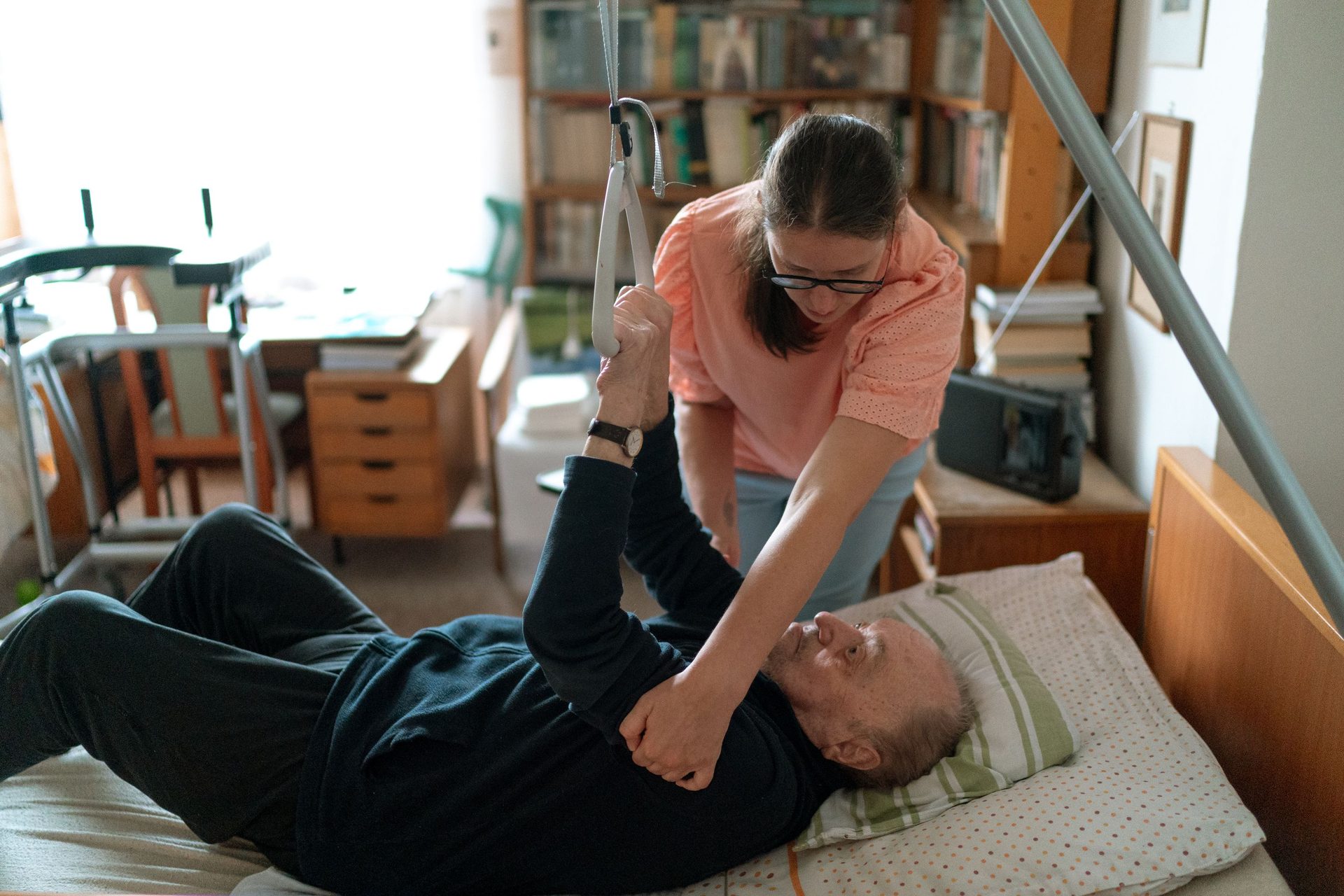
Care after a stroke at home means help with the everyday things a stroke can take away for a while: washing and dressing with one weak side, getting in and out of a chair safely, eating to the speech and language therapist's plan, and keeping up the exercises the NHS team has set. We arrange visiting care in Bexley, the City of London, Greenwich, Lewisham, Southwark, Tower Hamlets and Westminster, and live-in care across London, alongside the NHS rehab team. It starts with a free home assessment with Jackie, our registered manager.
What care after a stroke looks like at home
No two strokes leave the same picture. One person comes home walking with a stick but tired by lunchtime; another needs help to stand and cannot yet find the words for "tea". The care plan is built around what the person can do now and what the therapists are working on.
Personal care with one weak side
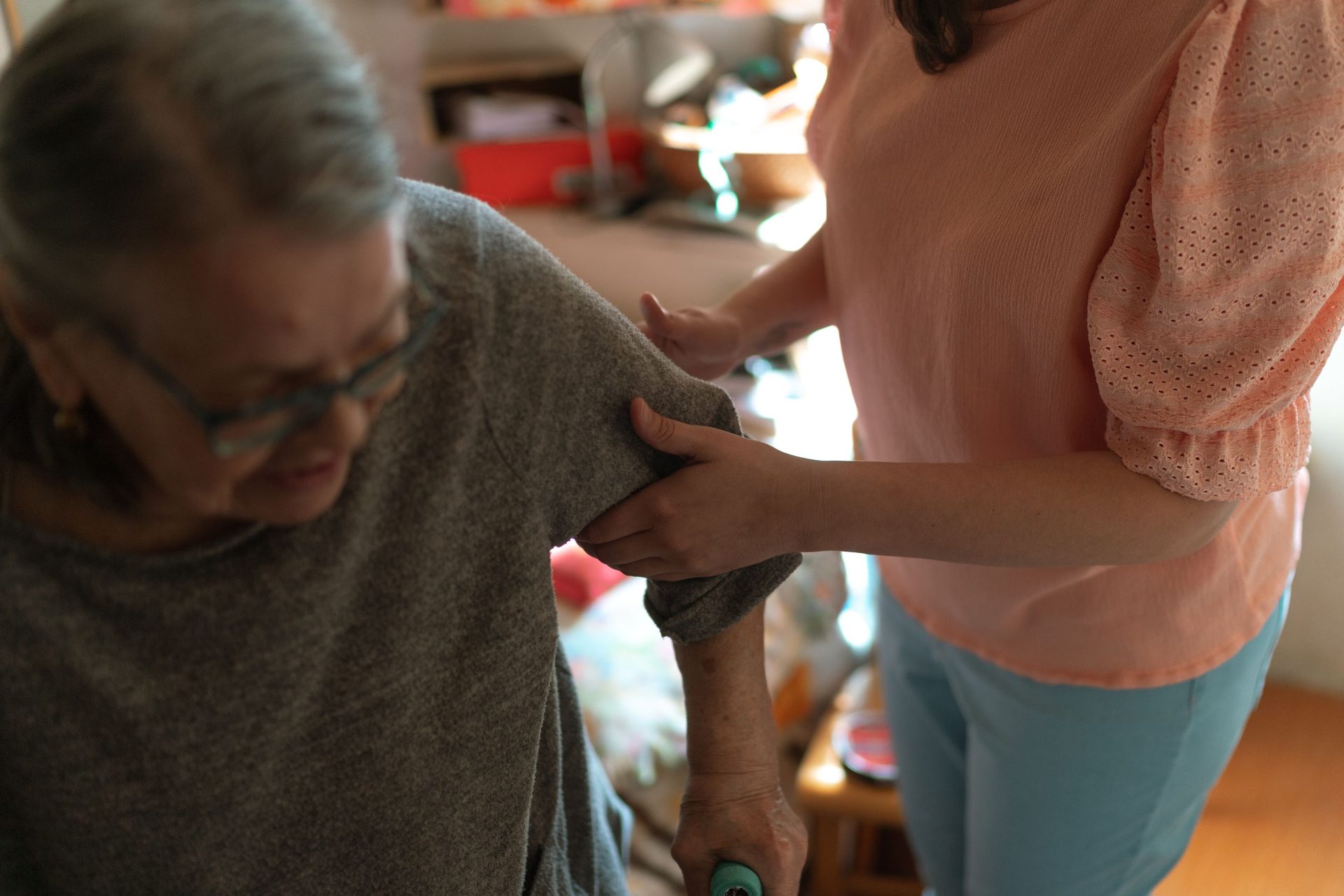
Washing, dressing, shaving, hair and continence care all take longer when one arm or leg will not do what it is told. Carers help with what is needed and leave the rest to the person, so they keep doing what they can. Our personal care page explains how we approach this with dignity.
Transfers, walking and falls
Getting from bed to chair, chair to toilet and in and out of the shower is where falls happen. Carers use the equipment and the method the occupational therapist or physiotherapist has set out, whether that is a frame, a stick, a transfer board or a raised toilet seat, and do not improvise a different one. If moving the person safely needs two people or a hoist, that must be in the plan from the start.
Eating, drinking and swallowing
The NHS lists stroke among the conditions that can cause swallowing problems (dysphagia), and says treatment can include softer foods and thickener in drinks, with advice from a speech and language therapist. Where a therapist has written a swallowing plan, carers follow it at every meal and drink: the texture of the food, how drinks are thickened, how the person sits and how fast they eat. We do not change the plan ourselves. If someone starts coughing at meals, we tell the family and the therapist or GP.
Communication and aphasia
According to the NHS, stroke is the most common cause of aphasia, and therapy usually involves family, friends and carers too. Carers learn how this person communicates best, whether pointing, a picture board or simply more time, and use the approach the speech and language therapist has suggested. A small, steady group of carers learns the person's way of saying things.
Tiredness and mood
A stroke can leave people very tired, and low or anxious. The NHS lists talking therapy for low mood, worry and tiredness as part of stroke recovery. Carers can pace the day around the person's energy and notice when someone is withdrawing or not themselves. They pass that on to the family and GP.
Medication
People often come home from a stroke ward on new medicines. Carers can prompt or help with tablets from the pharmacy packaging, following the prescription and the care plan, and record each dose. If swallowing tablets is a problem, that is a question for the pharmacist or GP. See our medication support page for what this covers.
If you see new signs of a stroke, call 999. The NHS says to call 999 straight away for face drooping, arm weakness or speech problems, even if the signs stop after a short time (NHS: symptoms of a stroke). A carer who sees these signs will call 999 first, then the family.
The first weeks home: fitting alongside rehab and reablement
The NHS says the healthcare team should keep supporting people after they leave hospital. NICE recommends early supported discharge for people who can move from bed to chair, independently or with help, when home is safe and secure. Therapy then carries on at home at the same intensity as in hospital. Others go home with a community stroke rehab team, or with council reablement.
The NHS describes this short-term support, also called intermediate care, reablement or rehabilitation, as free, for as long as it is needed, and usually for a maximum of 6 weeks. The NHS also says there should be a review of progress about six months after the stroke, so ask the team if one has not been booked.
Where we fit:
- Alongside the NHS team. The therapists set the goals and the exercises. Carers help the person practise what has been set between therapy sessions, encourage them to do things for themselves, and write down what went well and what did not. We are not therapists and we do not deliver therapy.
- Filling the gaps. Some families add private visits for meals, an evening wash or company.
- When short-term help ends. If care is still needed after reablement, we can take over so there is no gap. Ask for the council needs assessment before it finishes.
If you can, call us while the person is still on the ward. When we can staff it, care can be planned before discharge, so the first day home is covered. Our hospital discharge care page explains how discharge works in England, and our hospital discharge checklist lists what to ask the ward.
Visiting care or live-in care after a stroke
Visiting care suits someone who can be safely alone between visits: a morning call to get up and washed, help at lunch and tea, and an evening visit to get ready for bed. It is available in Bexley, the City of London, Greenwich, Lewisham, Southwark, Tower Hamlets and Westminster. In Barking and Dagenham, Bromley, Camden, Croydon, Dartford, Hackney, Hammersmith and Fulham, Haringey, Islington, Kensington and Chelsea, Lambeth, Merton, Newham, Redbridge, Waltham Forest and Wandsworth, visits depend on having a carer nearby, so ask first.
Live-in care suits someone who should not be alone in the house, perhaps because of falls, confusion or not being able to call for help. The carer lives in, works through the day and sleeps in a spare room at night. We arrange it across London. Our live-in care page explains how it works, and our 24-hour care at home page covers what happens at night.
We do not provide waking night carers or shift rotas. If the person needs help most nights, such as being turned or taken to the toilet several times, one live-in carer cannot do that safely, and we will say so at the assessment.
When needs go beyond what we provide
We are registered with the Care Quality Commission for personal care. Our carers are not nurses and do not carry out nursing or clinical tasks. Wound care, injections and decisions about medicines stay with the district nurses, the GP and the stroke team. Our complex care page sets out where that line sits, including tube feeding, which can only be part of a package where the NHS team has delegated it and signed off the carer.
We will tell you if we are not the right service, for example if the person needs nursing or someone awake every night, or we cannot staff the package with suitably trained carers. Then it may be worth asking for an NHS continuing healthcare assessment, or looking at a nursing home.
Support for the family
A stroke changes things for the whole household. A few things help:
- The Stroke Association helpline. The Stroke Support Helpline on 0303 3033 100 gives information and support to people who have had a stroke and their families.
- A carer's assessment. If you look after someone, you can ask the council for an assessment of your own needs. The NHS explains carer's assessments, and our carer's assessment guide covers what to expect.
- A break. Short-term respite care can give a family carer time off.
Paying for care after a stroke
- A council needs assessment. Free, and anyone can ask. You can apply through GOV.UK or ask the hospital social worker. If the council funds care, it is means-tested. Our guide to the care needs assessment explains the process.
- Attendance Allowance. For people over State Pension age who need help with personal care or supervision. It is £76.70 or £114.60 a week and not means-tested. GOV.UK says the person must usually have needed that help for at least 6 months, so after a stroke it is worth checking when to claim. People under State Pension age may be able to claim Personal Independence Payment instead. See our guide to Attendance Allowance rates.
- NHS continuing healthcare. Where needs are mainly health needs, the NHS may fund care in full. Our continuing healthcare guide explains the checklist.
- Paying privately. We give a written quote after the assessment, based on the hours and the type of care. We do not quote prices over the phone.
Our page on paying for care in London brings these routes together.
How to start
- Call or WhatsApp us on 07446 010486, or send a message. Tell us where the person is now and when discharge is likely.
- A free home assessment. Jackie, our registered manager, meets the person and the family. With your agreement she can speak to the therapists, the discharge team or the social worker, and read the plans they have written.
- An honest answer about whether we can staff it, from when, and whether visits or live-in care fits better.
- A written care plan and quote that builds in the therapists' guidance on moving, eating and communication.
- Reviews. We review the plan as things change, and reduce care as the person regains independence.
Areas we cover
Our office is in Lewisham, SE13. Visiting care runs in the boroughs below, and live-in care across London. JNP Sidona Support Services registered with the Care Quality Commission in October 2023 and has not yet been inspected, so we have no rating. Check your borough on our areas we serve page.
- Home care in Bexley
- Home care in the City of London
- Home care in Greenwich
- Home care in Lewisham
- Home care in Southwark
- Home care in Tower Hamlets
- Home care in Westminster
- Live-in care across London
Questions about stroke care at home
Can you start care as soon as my dad leaves the stroke unit?
Often, if you call while he is still on the ward. When we can staff it, we plan care before discharge so the first day is covered. If we cannot, we tell you straight away.
Do your carers do physiotherapy or speech therapy?
No. We are not therapists. NHS therapists set the exercises; our carers help the person practise them and report back on how it is going.
Can you help someone who has swallowing problems after a stroke?
Yes, where a speech and language therapist has written a plan for food textures and drinks. Carers follow it at every meal. Tube feeding is different: it is only possible where the NHS team delegates it and signs off the individual carer, so ask us first.
Is reablement after a stroke free?
The NHS describes intermediate care and reablement as free, usually for up to 6 weeks. Council-funded care after that is means-tested, unless the person qualifies for NHS continuing healthcare.
Do we need live-in care, or will visits be enough?
It depends on whether the person can be safely alone between visits and how the nights go. Jackie looks at both at the assessment. Live-in care also needs a spare room.
Are you stroke specialists?
We are a home care provider registered for personal care, not a specialist stroke service. We work to the plans written by the NHS stroke team, and we will tell you at the assessment if a package needs more than we can give.
Talk it through with Jackie
No call centre and no obligation. Tell us what you are dealing with and we will tell you honestly whether we can help. We arrange and provide care; we cannot advise on benefit claims.
Looking for work rather than care? Apply online or read about carer jobs in London. Referring as a professional? Use our referral route.
Ask us to call you back
Thank you. Your request has been sent and we will call you back as soon as we can.