Canonbury · Islington
Live-in Care in Canonbury
One carer living in with a Canonbury couple, or with one partner who now needs help, in a period house off the square or a two-bedroom estate flat behind Essex Road.
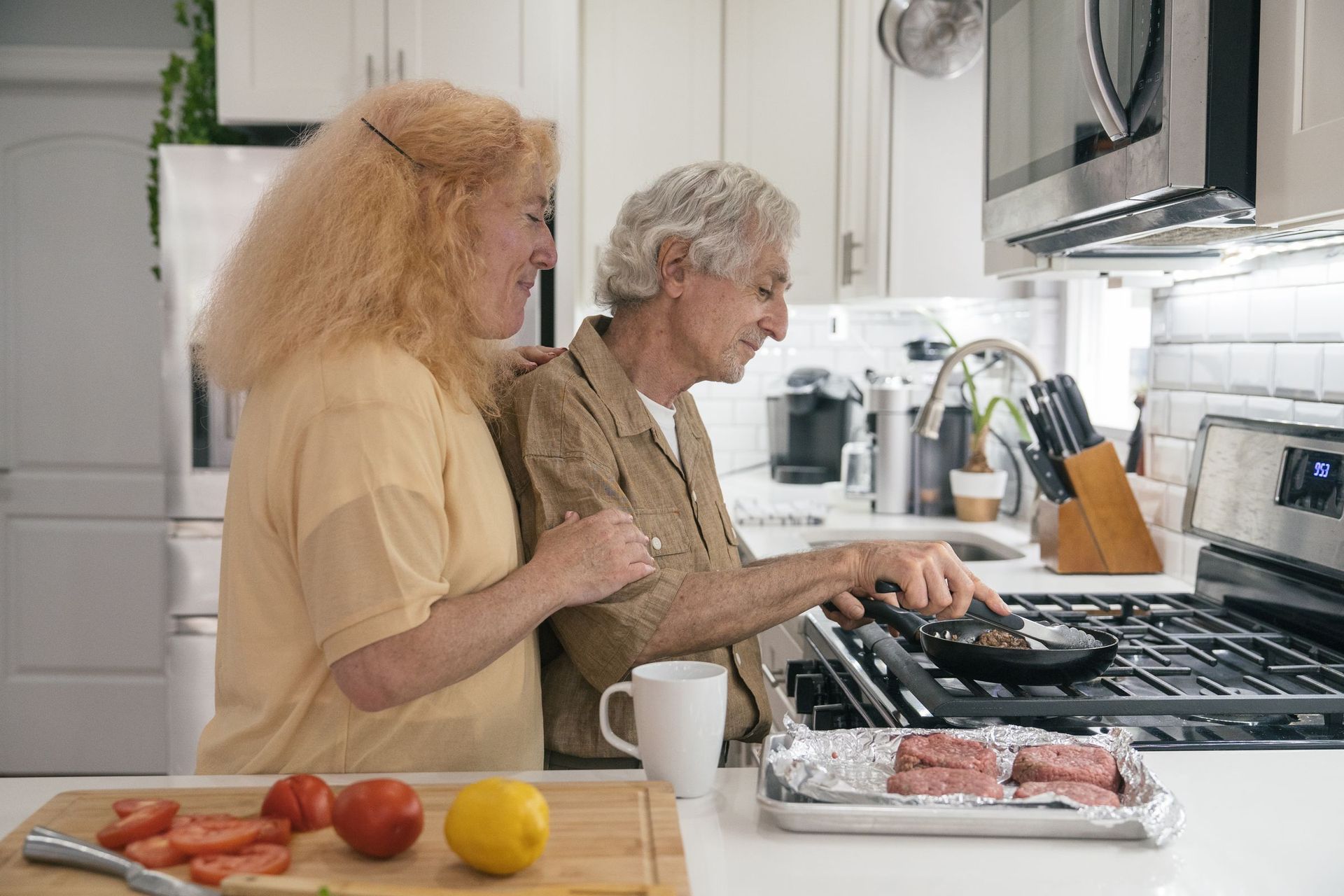
Most Canonbury enquiries we get are from a husband or wife who has been doing all the caring and is running out of strength. Live-in care is built for that. A carer moves into the spare room in N1 or N5 and takes on the personal care, the cooking, the housework and the outings, for one of you or both. Jackie, our registered manager, comes to the house, talks to you both, and writes the plan from there.
When one of you needs care and the other doesn't
Canonbury's couples range from owner-occupiers in a whole Georgian house to council tenants who have shared an estate flat behind Essex Road for decades. In Islington's Canonbury ward, the 2021 Census counted 264 residents giving 50 or more hours of unpaid care a week, among the higher figures in the borough, and many of them will be partners. Where one partner's needs have grown and the other has been doing the caring, live-in care lets the couple stay together without the healthier partner wearing themselves out.
The plan reflects that. The carer might help one partner wash, dress and move safely while simply cooking for both, keeping the house running and being on hand when the other wants a steady arm. The well partner keeps their own life: a walk, lunch with friends, an evening out, knowing someone is at home. If both partners need help, one carer can often support both, though if both need two-person handling we will tell you one carer is not enough.
Which Canonbury homes have room for a carer?
Canonbury's Georgian and early-Victorian terraces split two ways. Houses still lived in whole, around Canonbury Square and the streets off Canonbury Road and Canonbury Park North and South, nearly always have a spare bedroom, and often a floor the carer can treat as their own. Houses converted into flats are different: an upper flat often has a single bedroom plus a narrow room that takes a desk but not a bed.
On the post-war estates east of Essex Road, a two-bedroom flat on one level can be one of the easiest places to live in, because there are no internal stairs. A one-bedroom flat cannot take a live-in carer; there, visiting care in Canonbury is the practical route, and Canonbury's direct Overground link to south-east London helps.
Four storeys and one partner who can't manage them
In a whole terraced house, space is rarely the problem. The stairs are. Period staircases are often narrow, turn at half-landings and have a handrail on one side only, which can make a stairlift difficult or impossible to fit. Many of the Georgian houses around Canonbury Square are also listed buildings, so a second handrail, a stairlift or a new shower room may need listed building consent before it goes in. Ask the council's occupational therapists to assess first, then check with Islington's planning service before any work is booked. Freestanding equipment, such as a commode, a perching stool or a raised toilet seat, involves no building work and can bridge the gap.
Changeover via the Windrush line
Canonbury station is on two Overground lines, the Windrush and the Mildmay, and has lift access. The Windrush line runs south through Shadwell, the easiest rail link with south-east London, and Essex Road, on the Great Northern line out of Moorgate, is another arrival point. An incoming carer can reach Canonbury Square on foot from either, and the two carers hand over in the home.
Family visitors who drive can buy Islington visitor e-vouchers online and use them straight away. Paper vouchers take time to arrive and cannot be used during Arsenal match-day controls, so where the street has those controls, e-vouchers are the safer choice.
The carer's time off, and outings for two
The carer has a daily break, and in a couple the other partner can sometimes be at home for it. The New River Walk is the obvious place for a carer to clear their head, and Upper Street is a few minutes away. South Library, at Essex Road and Cross Street, suits the carer on their own; it has steps at the entrance and is not wheelchair accessible. For a trip together with a wheelchair, Central Library on Fieldway Crescent, near Highbury Corner, is fully accessible and open on Sunday afternoons. Highbury Fields is close by for a slow walk with both of you.
If you are weighing up extra care
On Canonbury's north-eastern edge, 73 Mildmay Street is the extra care scheme Islington's housing options page names, for people who need daily personal care in a flat of their own; it is reached through a social care needs assessment. Some couples look at it alongside live-in care. The difference is simple: extra care means moving to a new flat with care staff in the building, live-in care means the help comes to the home you already have.
How is live-in care for a couple paid for?
Islington looks at each partner separately, both their needs and their money; savings held jointly are usually treated as split equally between you. So one partner may qualify for council help while the other, needing no care, is not charged at all. Start with the council's needs assessment request. Our Islington live-in page covers direct payments and NHS Continuing Healthcare. Our own price follows Jackie's visit, in writing.
Live-in care elsewhere in Islington
Living in Canonbury
Homes and health services in Canonbury
Homes in Canonbury
Georgian and early-Victorian terraces (many split into flats with steep stairs) and post-war council estates.
NHS hospitals
Whittington Hospital and University College Hospital
Memory and dementia
My husband has dementia and I'm managing, just. Is live-in care for him, for me, or both?
Both, in practice. The plan is written around his needs, but it also says what the carer does to take pressure off you, such as nights out of the house or simply not being the only person he can turn to. A carer's assessment from the council or the Islington Carers Hub looks at your own needs too.
If I need a few days away, can the carer stay on with my husband alone?
Yes. His needs are already in the plan; before you go, we check whether anything you usually do for him needs adding, and you leave contact numbers. The carer still needs their daily break, so we agree who covers it while you are away.
If my wife goes into hospital, does the carer stay with me?
That depends on your own needs and what you would like. If you need support too, the carer can stay and the plan is adjusted; if you don't, the arrangement can be paused. We agree this in advance so it is not decided in a crisis.
We own the house but our savings are modest. Will the council count the house?
Under the Care Act statutory guidance, the value of the home you live in is not counted when care is provided in that home. Savings and income are. The council's financial assessment works this out for each of you, and its online cost of care calculator gives an early estimate.
Our house is listed. Can we still put in a stairlift?
Possibly, but check with Islington's planning service first, because listed building consent may be needed. An occupational therapist can suggest options that need no fixings in the meantime.
Nearby
Nearest areas to Canonbury outside Islington
Closest first, measured in a straight line from the centre of Canonbury.