Harrow Weald · Harrow
Live-in Care in Harrow Weald
No station, steep roads towards Old Redding and plenty of three-bedroom semis: how a resident carer works in Harrow Weald for couples and for parents on their own.
Harrow Weald has no Tube station, which rules out daily visits from our side of London but hardly affects live-in care: the carer makes one journey in and stays. In their own room, they help with washing, dressing, meals, medicines, housework and getting out, for a parent alone or for a couple. Every placement starts with a free assessment at home and a written plan.
Keeping a couple under one roof
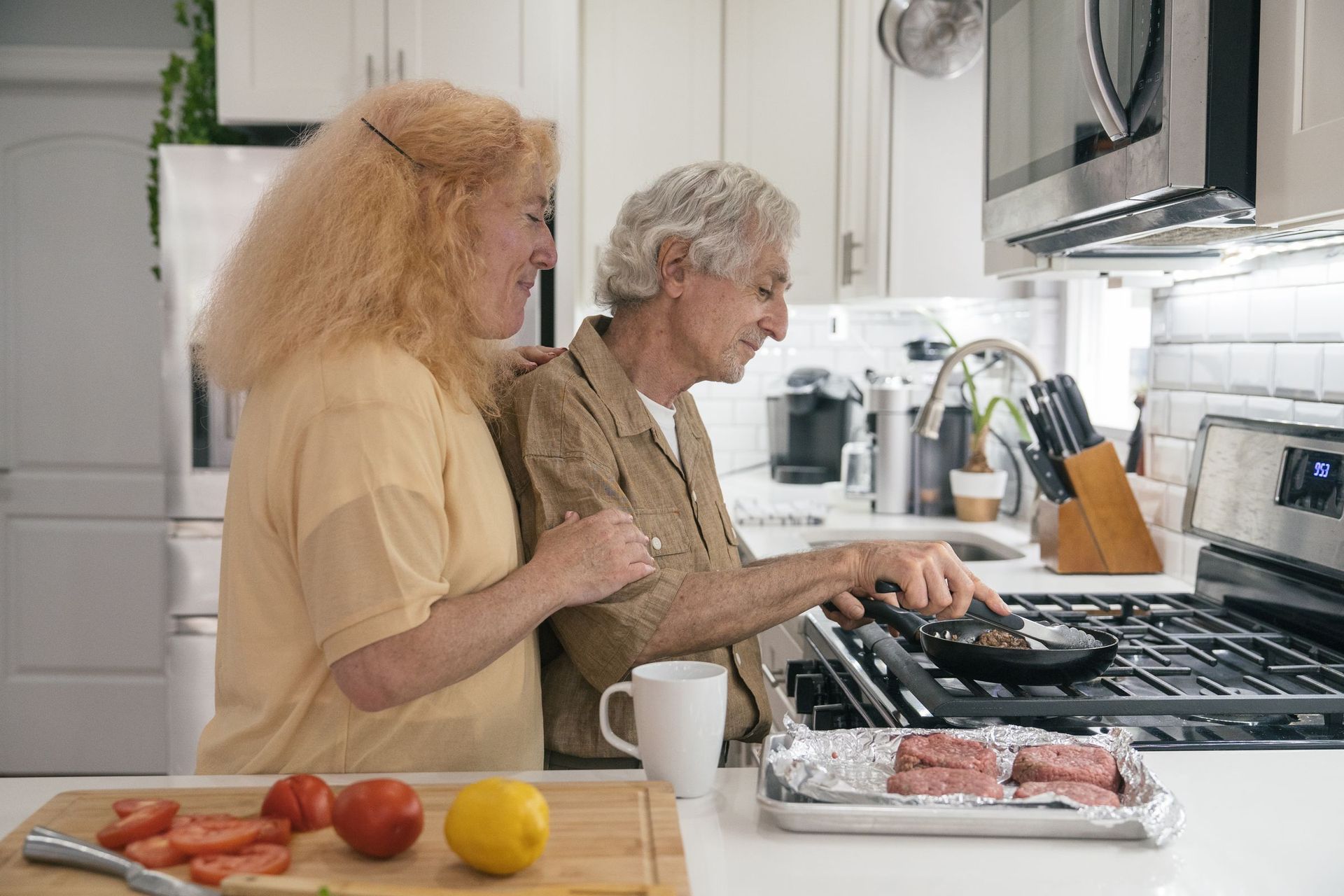
When one partner moves into a care home, a household splits. With a resident carer in a three-bedroom Harrow Weald semi, one carer works around two people's days: full personal care for one, and for the other perhaps the cooking, the High Road shopping, a lift to the GP or company on the bus down to Wealdstone. The plan records what each of you wants to keep doing for yourselves. It also says what happens if one of you goes into hospital: the carer keeps the other's days steady until their husband or wife is home. If either of you needs two people for every transfer, or is up repeatedly at night, one carer is not enough, and we will say so.
From the High Road up to Old Redding
Harrow Weald's population jumped from about 1,500 in 1901 to nearly 11,000 by 1931, and most homes are the interwar semis and detached houses of that boom, many with three bedrooms. The 1960s and 70s estates have smaller houses and flats, where the second bedroom needs checking. Sheltered housing is hardest: many flats have one bedroom, and schemes set their own rules on anyone living in, so speak to the scheme manager first. Where a home cannot take a resident carer, a visiting agency with drivers in HA3 is the realistic alternative.
Inside, the upstairs bathroom is the usual problem; rails, a stairlift or a bed downstairs can follow a council assessment. Outside, the land rises steeply towards Old Redding, so walk the route from front door to car or bus stop with a wheelchair in mind before the carer starts.
The last mile with a suitcase
Most carers come into Harrow & Wealdstone, which has lifts (TfL advises the Wealdstone High Street entrance for step-free access), then take a bus up the High Road; routes include the 140, 182 and 186. Headstone Lane on the Lioness line suits the western side. For houses near the top of the hill, a family pick-up or a taxi is often simpler, and we agree which at the assessment. Most roads here are uncontrolled, so a car can usually stop at the door. In a zone, a virtual visitor permit covers handover day, half price with a Blue Badge or Freedom Pass.
Because getting here takes planning, we book the next carer's arrival well ahead of each handover and overlap the two, so neither partner is ever alone at changeover.
Woods and views for the carer's break
The carer has a protected break each day, and here the obvious place is outdoors. Grimsdyke open space, off Old Redding, is woodland joining Harrow Weald Common, close to the hotel that was once W. S. Gilbert's home. Further along Old Redding, the Viewpoint has parking and wide views across London on a clear day, an easy outing by car for someone who can no longer walk far. Both are on Harrow's open spaces page. Bentley Priory, Fighter Command's headquarters in the Battle of Britain, has been a museum since 2013. Down the hill, Wealdstone Library has computers and Wi-Fi.
Coming home from Brockley Hill or Northwick Park
Harrow Weald is close to the Royal National Orthopaedic Hospital as well as Northwick Park. After a joint or spinal operation, the first weeks are when a resident carer matters most: in and out of bed and the shower, following the exercise plan, and noticing when something is not right. Harrow's reablement only covers recoveries expected within six weeks, and the council says hip replacements may not qualify, so call us before the discharge date is fixed. District nurses from Central London Community Healthcare handle wounds and injections, with the carer following their instructions.
Cost, and two assessments for two people
We give a written figure after the free assessment. If both partners need care, each has a separate needs assessment from Harrow Council, and the means test leaves out the house you live in. The council route, direct payments and NHS Continuing Healthcare are explained on our Harrow live-in care page, and live-in care in London covers how placements work.

Live-in care elsewhere in Harrow
Living in Harrow Weald
Homes and health services in Harrow Weald
Homes in Harrow Weald
Interwar semis and detached houses, some 1960s-70s estates and sheltered housing.
NHS hospitals
Northwick Park Hospital and Royal National Orthopaedic Hospital, Stanmore
Memory and dementia
Mum is having a new knee at the RNOH and Dad depends on her. What happens to him?
A carer can move in before she is admitted, look after your father while she is in Stanmore, then support both of them once she is back. Tell us the date early.
Dad's sheltered flat off the High Road has one bedroom. Can a carer live in?
Not without a second bedroom, and the scheme's rules may say no anyway. Ask the manager what support the scheme gives, and consider a local visiting agency or a move to somewhere with a spare room.
Our house is near the top of the hill. Will the carer be stranded without a car?
No, but it needs planning. Buses run down to Harrow & Wealdstone and the High Road shops. If your parents rely on being driven, raise it at the assessment.
Mum looks after Dad, who has dementia. Will she get time to herself?
Yes, that is much of the point. She can go out, see friends or rest. She can also ask for a carer's assessment of her own, through the council or Harrow Carers.
Nearby
Nearest areas to Harrow Weald outside Harrow
Closest first, measured in a straight line from the centre of Harrow Weald.